If your skin feels tight, fine lines become more visible, and makeup starts to drift into dry patches by midday, you are not alone. Dryness and visible signs of ageing often go hand in hand: as skin ages, it loses water, lipid content, and structural proteins, making it drier, thinner, and less resilient. The good news is modern skincare science gives us precise, evidence-backed ingredients to target the root causes of dryness and ageing, not just the surface symptoms. This guide explains how the most effective mature skin ingredients work, how to combine them safely, and how to structure a routine that restores moisture, strengthens the skin barrier, and improves texture and tone over time.

Why dry and mature skin behave differently
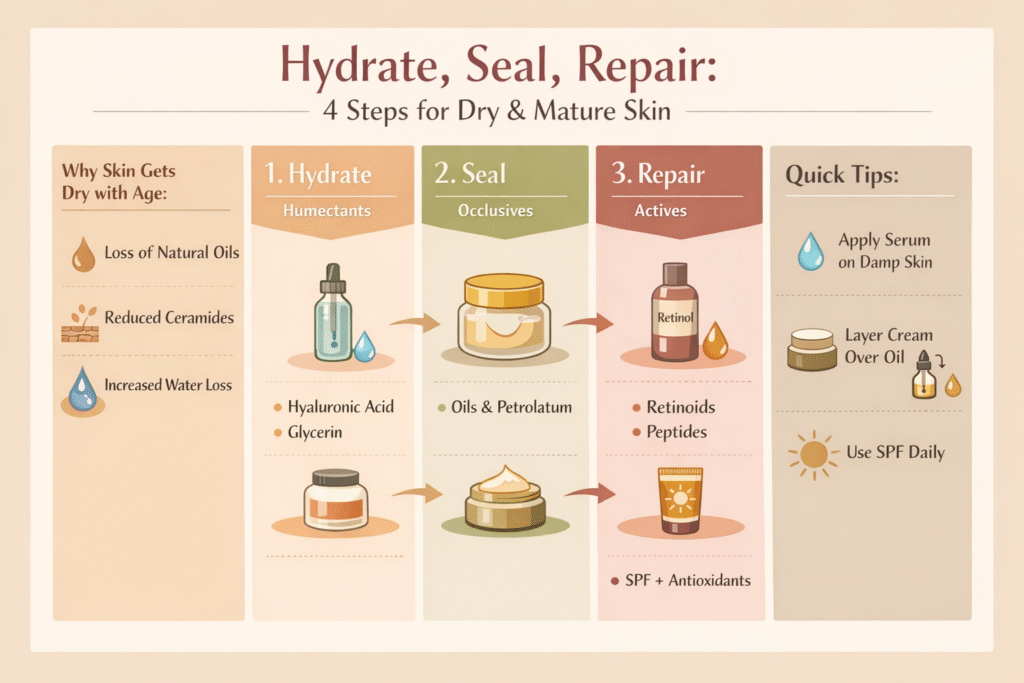
Ageing skin is not simply “older skin”; it undergoes measurable biological changes. Over time, the epidermis thins, natural oil (sebum) production declines, and the extracellular matrix (collagen, elastin, hyaluronic acid) becomes fragmented. Skin’s ability to retain water decreases because of fewer natural moisturising factors (NMFs) and a weakened lipid barrier. Environmental damage (UV exposure, pollution), hormonal shifts, and cumulative oxidative stress accelerate these changes. For dry skin specifically, a compromised lipid barrier leads to greater transepidermal water loss (TEWL). That worsens fine lines and creates a rough, flaky surface. Understanding these mechanisms helps us choose ingredients that rebuild the barrier, attract and hold water, and stimulate the skin’s repair systems.
Core goals for ingredient selection
When treating dry and mature skin, focus on three parallel goals: restore barrier lipids, hydrate at different skin depths, and stimulate repair/renewal. Each ingredient family contributes to one or more of these goals:
- Barrier repair — replace or mimic skin lipids (ceramides, cholesterol, fatty acids) and prevent TEWL.
- Hydration — attract water (humectants like hyaluronic acid and glycerin) and seal it in with occlusives (oils, petrolatum, fatty alcohols).
- Repair & stimulation — support collagen, elastin, and cell turnover safely (retinoids, peptides, growth-factor mimetics, antioxidants).
Successful routines often include a combination of these functions rather than relying on a single “miracle” ingredient.
Ingredients that actually work (what they do and why they matter)
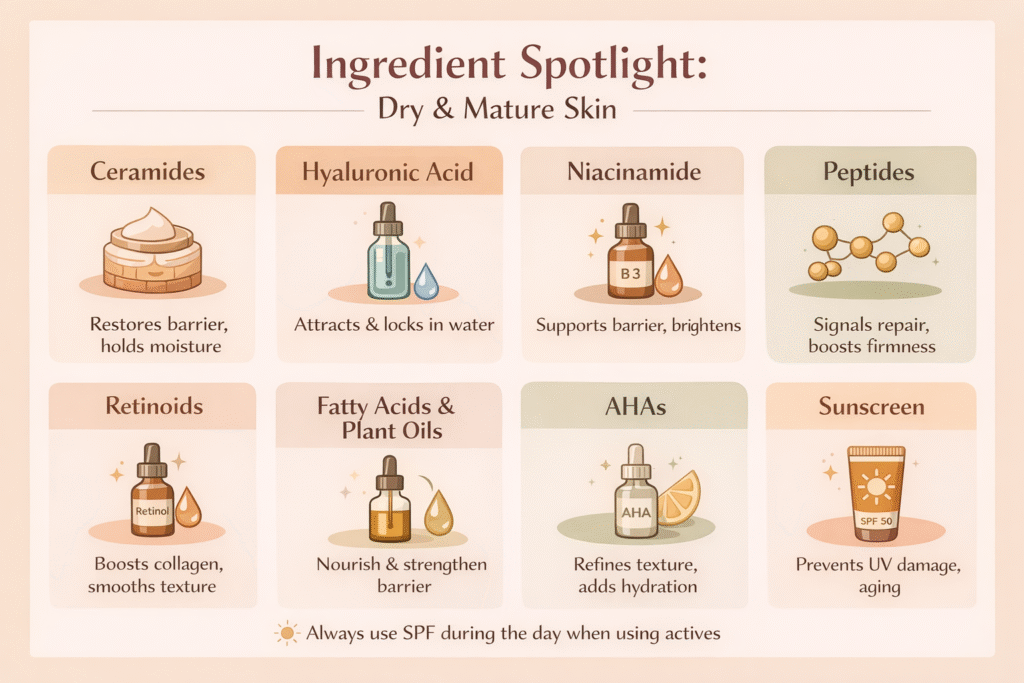
Ceramides: the structural lipids
Ceramides are a primary component of the stratum corneum’s lipid matrix and are essential to barrier function. With age and in dry skin, ceramide levels drop, increasing TEWL and irritation. Topical products formulated with ceramides (often combined with cholesterol and fatty acids in specific ratios) help rebuild the lipid matrix, improving hydration, texture, and tolerance to other active ingredients. For mature skin, look for ceramide-containing creams or serums with a milky or balm texture — these are often more occlusive.
Hyaluronic acid (HA): multi-depth hydration
Hyaluronic acid is a glycosaminoglycan capable of holding many times its weight in water. It exists naturally in the dermis and epidermis and helps maintain turgor and plumpness. In skincare, HA comes in various molecular weights: high-molecular-weight HA sits on the surface to smooth and hydrate, while low-molecular-weight HA (or fragmented HA) may penetrate more deeply. For dry, mature skin, pairing HA serums with an occlusive moisturiser locks that hydration in and prevents it from evaporating.
Glycerin & other humectants: everyday hydration heroes
Glycerin is a powerful humectant that attracts water to the outer skin layers and supports barrier repair by improving the flexibility of corneocytes. Other effective humectants include propanediol, panthenol (pro-vitamin B5), and sorbitol. Humectants are gentle and suitable for daily use; they perform best when combined with occlusives in the final step to prevent moisture loss.
Occlusives: sealing the gains
Occlusives like petrolatum, dimethicone, certain botanical oils, and heavier butters create a physical barrier on the skin that drastically reduces TEWL. For mature skin, occlusives are often the difference between temporary moisture improvement and sustained change. Petrolatum remains the gold standard for TEWL reduction; however, many prefer plant oils (squalane, jojoba, meadowfoam) for a lighter feel and antioxidant benefits. Choose a richer, cream or balm-style moisturiser for night use and a lighter but occlusive formula for daytime if you tolerate it under makeup.
Niacinamide (vitamin B3): barrier, pigment, and more
Niacinamide is a multi-tasking ingredient that boosts ceramide synthesis, improves barrier function, reduces redness and blotchiness, and can help regulate sebum. For mature, dry skin, it supports lipid production and improves elasticity and texture over time. It pairs well with most actives and is typically well tolerated.
Peptides: signalling repair
Peptides are short amino-acid chains that can signal skin cells to produce more collagen and structural proteins or to strengthen the dermal-epidermal junction. Popular peptides for mature skin include palmitoyl peptides, copper peptides, and signal peptides (e.g., Matrixyl). Unlike stronger cell-turnover actives, peptides are gentle and complementary to barrier-repair strategies.
Retinoids: gold-standard remodelling (use gently)
Retinoids (retinol, retinaldehyde, prescription tretinoin) are the most-studied ingredients for stimulating collagen synthesis and accelerating cell turnover, which reduces fine lines and evens skin texture. However, they can be drying and irritating — especially in dry, mature skin. The best approach is lower starting concentrations, slower build-up (every-other-night or less at first), and pairing with barrier-supportive ingredients like ceramides, niacinamide, and humectants. Many modern formulations pair retinoids with moisturising bases or use encapsulated forms to improve tolerability.
Antioxidants: defence and repair
Oxidative stress from UV exposure and pollution breaks down collagen and accelerates visible ageing. Antioxidants such as vitamin C (ascorbic acid or stabilised derivatives), vitamin E (tocopherol), ferulic acid, resveratrol, and niacinamide help neutralise free radicals and may support collagen production. Vitamin C also brightens and helps with pigment. For mature skin, topical antioxidants applied in the morning form a protective layer; avoid overly potent vitamin C concentrations if your barrier is compromised — start low and increase as tolerance allows.
Fatty acids & plant oils: nutrition and comfort
Essential fatty acids (linoleic acid, alpha-linolenic acid) and oils rich in them nourish the lipid matrix and reduce inflammation. Oils like evening primrose, rosehip, squalane, and argan oil can improve comfort, add occlusion, and provide antioxidant benefits. Rosehip oil is often used for its linoleic/linolenic profile and retinoic-like activity in a mild form, which can help with texture and pigmentation over time.
Alpha hydroxy acids (AHAs): gentle resurfacing for texture and hydration
AHAs (glycolic, lactic, mandelic acids) remove dead surface cells and can improve roughness and dullness. Lactic acid, in particular, has humectant properties and is well-suited for dry, mature skin when used at low concentrations. Chemical exfoliation should always be balanced with barrier repair — exfoliate gently and follow with hydrating, lipid-rich products.
Beta hydroxy acid (salicylic acid): use with caution
Salicylic acid is excellent for oily, acne-prone skin, but it can be drying. For mature dry skin, use sparingly and focus on breakouts rather than routine daily exfoliation.
Sunscreens — prevention is the most effective anti-ageing step
Daily broad-spectrum sunscreen (SPF 30–50) is non-negotiable. UV exposure is the single biggest driver of extrinsic ageing; consistent sun protection prevents collagen breakdown, reduces pigment formation, and preserves the effects of active treatments. For dry, mature skin, mineral sunscreens (zinc oxide, titanium dioxide) in modern formulas can be moisturising and physical, providing a gentler option when chemical filters irritate.
How to build a practical routine (morning and evening)
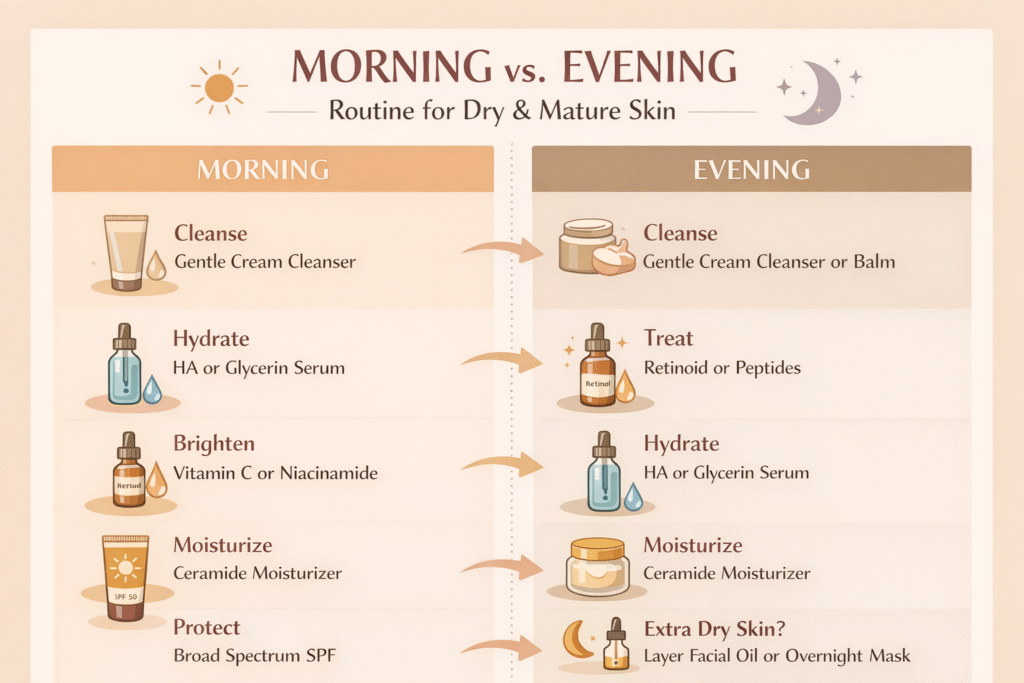
Below is a template routine focused on rebuilding the barrier, staying hydrated, and supporting long-term remodelling. These are paragraphs describing steps rather than a list of product names — that lets you choose brands and textures that match your skin and preferences.
In the morning, start with a gentle, cream-based cleanser that removes overnight oils and debris without stripping natural lipids. Follow with a hydrating serum centred on humectants such as glycerin or low-to-mid weight hyaluronic acid; this replenishes water content in the stratum corneum and prepares the skin to receive other actives.
Next, apply a serum with antioxidants — a stabilised vitamin C derivative for brightening and collagen support is a common choice; if vitamin C is too irritating, choose a niacinamide serum which supports barrier lipids and reduces redness. Seal the routine with a moisturiser containing ceramides, cholesterol, and fatty acids to rebuild the lipid matrix, and apply a broad-spectrum sunscreen as the final step. If you need extra occlusion in winter or overnight, add a facial oil or balm on top.
In the evening, cleanse with a gentle balm or cream cleanser that removes makeup and sunscreen while preserving barrier lipids. If you use a retinoid, apply it after cleansing on completely dry skin, starting with a low concentration and limited frequency (e.g., twice weekly) and increasing as tolerated. After retinoid application (or on nights when you skip retinoid), follow with a hydrating serum and finish with a richer moisturiser packed with ceramides and occlusives. If your skin is extremely dry, layer a thin facial oil or overnight sleeping mask to provide additional occlusion. Always counteract exfoliation or retinoid-induced dryness with barrier-supportive products.
Combining actives safely
Combining multiple actives can accelerate results but also raise irritation risk. For dry, mature skin, adopt a “repair-first” approach: prioritise hydration and barrier repair before introducing potent actives. Once the skin barrier is consistently healthy, add single actives slowly, one at a time, observing for irritation.
Retinoids can be paired with peptides, niacinamide, and humectants. Antioxidants like vitamin C are best used in the morning (paired with sunscreen), but can also be layered with niacinamide safely. Chemical exfoliants (AHAs) should be used judiciously with retinoids — spacing them out on alternate nights or using lower concentrations reduces risk. If you experience irritation, reduce frequency, buffer retinoids by applying moisturiser first, or switch to gentler derivatives.
Texture, formulation, and sensory considerations
Clinical efficacy hinges not only on active ingredients but also on formulation. For mature, dry skin, richer textures are often better because they deliver occlusion and increase contact time. Look for products labelled “cream,” “balm,” or “rich” and check that humectants, ceramides, and occlusives appear in the ingredient list. Delivery systems like encapsulation can modulate irritation for retinoids. pH matters for acids (AHAs need an acidic pH to work), while niacinamide and peptides are stable across a range of pH levels. Packaging that prevents light and air exposure (pump bottles, tubes, opaque jars) helps preserve ingredient potency, particularly for vitamin C and certain antioxidants.
Timing and patience: how long until you see results?
Hydration and immediate plumping often produce perceptible results within days to weeks — humectants and occlusives make skin look and feel smoother quickly. Structural changes from retinoids and peptides, such as increased collagen and reduced fine lines, take longer; clinical studies commonly show measurable improvement after 8–12 weeks of consistent use. Antioxidant protection is cumulative: daily sunscreen and antioxidant use over months reduces future photoaging. The realistic expectation-setting: immediate comfort and smoother texture within a week or two; pigment and collagen improvements over 2–3 months; and continued incremental improvements with long-term, consistent use.
Common mistakes and myths
One common mistake is over-exfoliation: too much mechanical or chemical exfoliation thins the barrier and increases dryness and sensitivity. Another myth is that oil alone is enough for hydration — while oils are excellent occlusives and nutritive agents, they don’t replace humectants or repair lipids like ceramides. “Natural” always being better is a misconception: some natural essential oils or botanical extracts can be irritating and inflammatory for mature, dry skin. Conversely, synthetic ingredients like petrolatum or dimethicone are exceptionally effective at preventing TEWL and are safe for many skin types. Finally, skipping sunscreen or using it inconsistently negates the benefits of advanced actives — prevention beats correction.
Closing: a gentle, science-backed philosophy
Dry and mature skin deserves a thoughtful approach that prioritises barrier restoration, multi-depth hydration, and safe, evidence-based stimulation of repair processes. There are no shortcuts: consistent protection (sunscreen), steady hydration (humectants + occlusives), targeted repair (peptides, niacinamide), and carefully introduced retinoids will, over time, restore comfort, reduce the appearance of lines, and improve tone and texture. Embrace routines that nourish rather than strip, and remember that small, steady changes are the most sustainable path to healthier, glowing skin.
Bear in mind that some of the links in this post are affiliate links and if you go through them to make a purchase I will earn a commission. Keep in mind that I link these companies and their products because of their quality and not because of the commission I receive from your purchases. The decision is yours, and whether or not you decide to buy something is completely up to you.