When you’re browsing the beauty aisle or scrolling through Instagram, it’s impossible to ignore the wave of skincare infused makeup products flooding the market. Foundations that promise to reduce fine lines, primers that claim to plump and hydrate, and tinted moisturisers that advertise brightening or anti-ageing effects are everywhere. It’s tempting to believe that your makeup isn’t just giving you a flawless finish but is actively improving your skin behind the scenes. But the truth is a bit more complicated, and a lot more interesting.
The idea of makeup doubling as skincare is incredibly appealing, especially for those of us with busy mornings or an already extensive skincare routine. If a foundation could brighten, hydrate, and smooth, why wouldn’t we skip a few steps? However, the reality is that not all skincare ingredients in makeup are created equal. Their effectiveness can be far more limited than brands would have you believe. In this post, we’re going to dig deep into how makeup can carry skincare ingredients, what works, and what doesn’t. We will see how you can set realistic expectations without falling for clever marketing.
Makeup Meets Skincare: A Trend You Can’t Ignore
The hybrid makeup-skincare market is booming. Brands from drugstore favourites to high-end luxury labels are releasing products that blur the lines between the two worlds. You’ve probably seen primers advertised as “hydrating” or “plumping,” foundations claiming to fade dark spots or reduce wrinkles, and tinted moisturisers promising “all-day nourishment.”
The appeal is obvious: we live in a world that values convenience, and makeup that claims to do double duty fits perfectly into that lifestyle. The marketing message is powerful—apply your foundation in the morning, and by evening, your skin has improved, while you’ve looked flawless the whole day. Social media influencers and celebrity endorsements reinforce this, often making it feel like these products are a skincare miracle inside a pretty bottle.
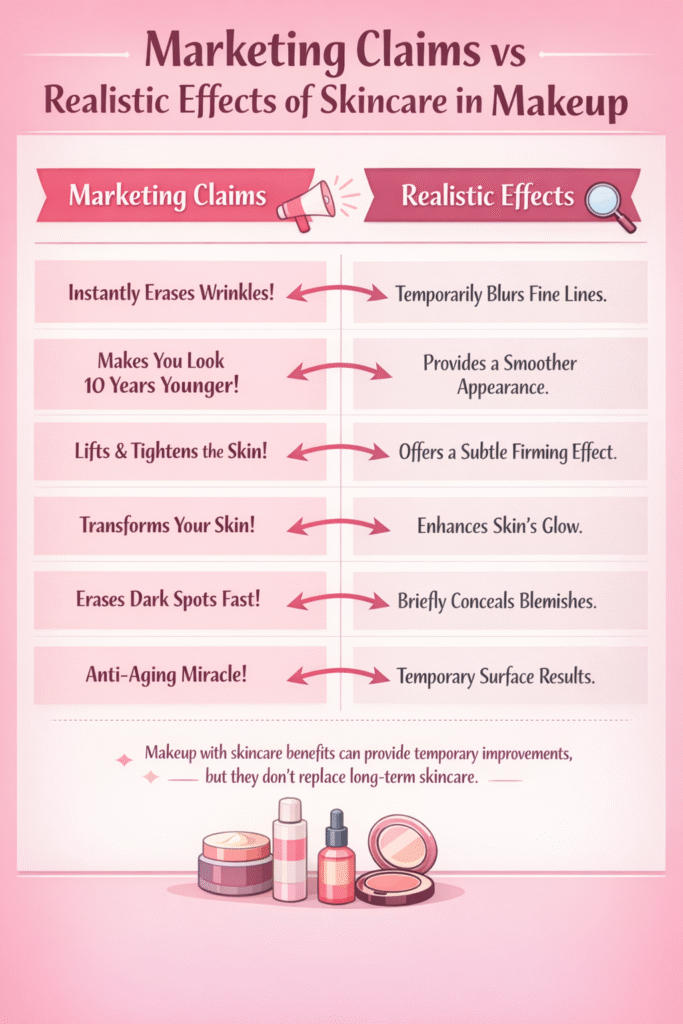
But here’s the thing: there’s a difference between temporary effects (like smoothing or hydrating while the product is on your skin) and long-term skin improvements (like reducing fine lines or fading hyperpigmentation). Understanding this difference is key to separating marketing from reality.
The Most Common Skincare Ingredients in Makeup
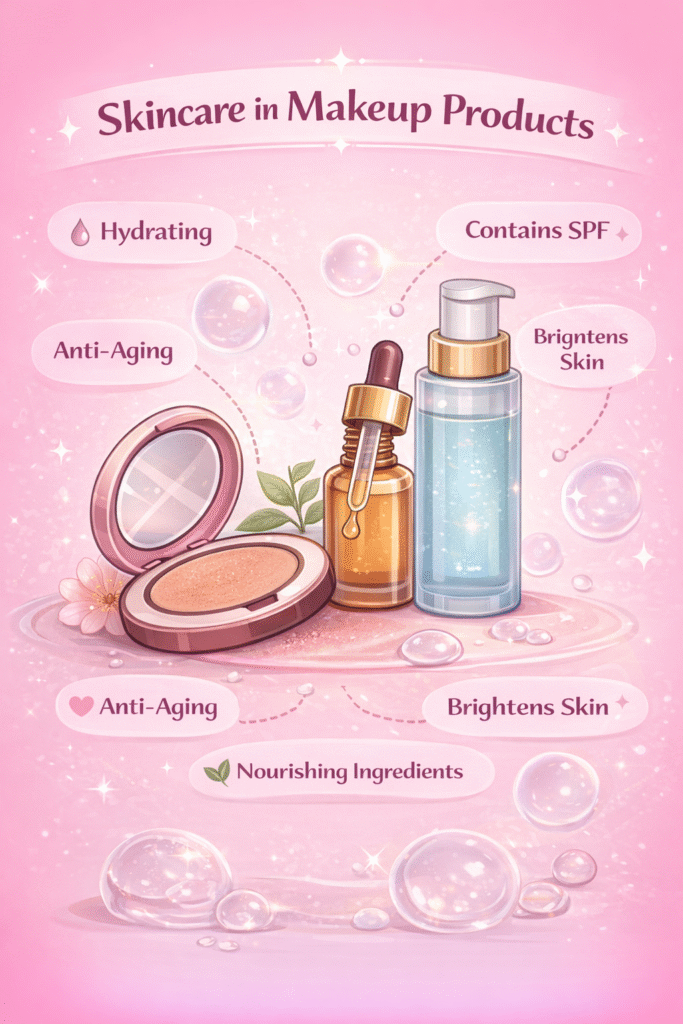
Let’s break down the most commonly included actives in makeup and what they actually do:
1. Niacinamide (Vitamin B3)
Niacinamide is a versatile ingredient loved for its brightening, anti-inflammatory, and barrier-strengthening properties. It can help even out skin tone, reduce redness, and improve the skin’s resilience. When used in serums or creams at the right concentration, it’s genuinely effective. But in makeup, the concentration is usually much lower, and the product sits on the surface rather than penetrating the skin for long-term benefits. The result? You might notice a subtle glow while wearing it, but you won’t see dramatic improvements in pigmentation or texture from your foundation alone.
2. Hyaluronic Acid (HA)
Hyaluronic acid is a humectant, meaning it draws moisture to the skin. Makeup products with HA can create a temporary plumping and hydrating effect, which can smooth fine lines and give a dewy finish. This works because HA can hold water on the skin’s surface, but it doesn’t penetrate deeply enough in makeup form to provide the same hydration boost as a dedicated serum or cream. Still, it’s a lovely bonus if you’re looking for a hydrating finish in your base products.
3. Peptides
Peptides are small chains of amino acids that can signal the skin to produce collagen. They’re popular in anti-ageing skincare because of their potential to improve elasticity and reduce fine lines over time. However, in makeup, peptides are often present in minuscule amounts, and like other actives, they’re applied and removed daily. They may provide a marketing edge, but don’t expect to see measurable wrinkle reduction from your foundation alone.
4. Antioxidants (Vitamin C, Vitamin E, Green Tea Extract, etc.)
Antioxidants protect against free radicals, which are unstable molecules that can damage skin cells and accelerate ageing. Makeup with antioxidants can give your skin a tiny shield while worn, but the concentration and stability of these ingredients are often insufficient for long-term anti-ageing effects. Additionally, some antioxidants degrade quickly when exposed to light and air, so their benefit in a foundation or primer can be fleeting.
5. SPF
Some foundations and tinted moisturisers include SPF. This is genuinely beneficial as an extra layer of sun protection, but it’s important to remember that the coverage is often too light to replace dedicated sunscreen. You still need a proper SPF applied first.
What Really Happens When You Wear Skincare Infused Makeup
Here’s the reality: makeup can provide instant, visible benefits, but most skincare claims are limited in scope.
Temporary Hydration and Plumping: Ingredients like hyaluronic acid and glycerin attract water to the skin, making it look smoother and plumper for the day.
Surface Smoothing: Primers and foundations often contain silicones or light-diffusing powders that blur imperfections. This is not “anti-ageing” in a biological sense, but it does make the skin look better immediately.
Bonus Antioxidant Protection: You may get minor protection from environmental stressors while the makeup is on.
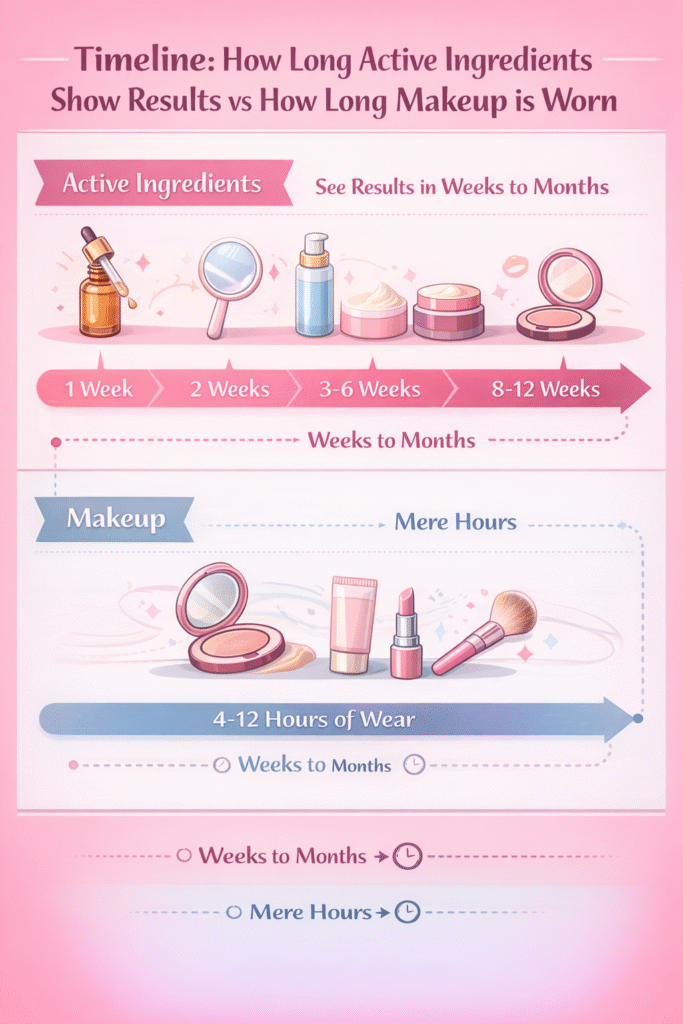
The key limitation? Duration and concentration. Unlike a serum or cream, makeup is washed off at the end of the day, and the active ingredients are usually too low in concentration to make long-term changes. So while your skin may look radiant and hydrated while wearing the product, don’t expect it to replace your morning serum or night cream.
Marketing Tricks to Watch For in Skincare Infused Makeup
The beauty industry is a master at crafting messages that make us believe in miracles. Here are some things to watch for:
Buzzwords Without Proof: Terms like “age-defying,” “blemish-correcting,” or “miracle serum in a foundation” sound amazing, but often aren’t backed by studies.
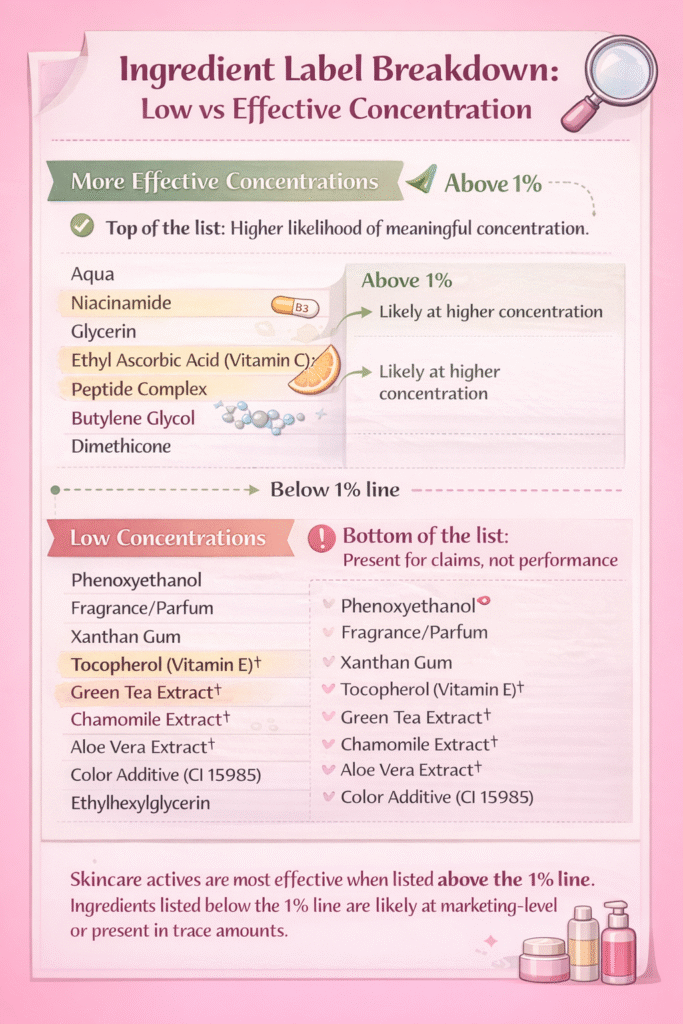
Ingredient Placement: Skincare actives are sometimes listed far down on the ingredient list, meaning their concentration is tiny.
Clinical Claims: “Tested by dermatologists” or “clinically proven” doesn’t always translate to visible results. The conditions of the test and the concentration of the actives matter.
Packaging Psychology: Sleek bottles, high-end design, and celebrity endorsements can create the perception of effectiveness without delivering measurable results.
How to Make Skincare Infused Makeup Work for You
If you love the idea of makeup with skincare benefits, you can absolutely use it—but with realistic expectations:
Layer Skincare First: Think of makeup as a bonus. Apply your serums, moisturisers, and SPF before makeup to ensure your skin is getting the treatment it needs.
Focus on Reliable Actives: Look for ingredients that have proven benefits, even if the concentration in makeup is small. Hyaluronic acid for hydration and antioxidants for minor protection are great examples.
Enjoy Temporary Effects: Silicones and light-diffusing powders can blur imperfections, and humectants can plump fine lines while the makeup is on. These are valid, immediate benefits.
Use Consistently for Bonus Effects: Some primers or tinted moisturisers with humectants can slightly improve hydration over time if used daily, but don’t expect major skincare transformations.
Case Study Examples
Example 1: A Niacinamide-Infused Foundation
The foundation claims to “brighten, reduce redness, and improve skin tone.” Looking at the ingredient list, niacinamide is present but low down, meaning the concentration is likely too small to make a visible difference in skin tone over time. While the foundation does create an even, radiant finish, your skin tone improvements will still rely on your dedicated niacinamide serum or cream.
Example 2: A Hyaluronic Acid Primer
This primer promises to “plump fine lines and hydrate the skin all day.” In reality, it does attract moisture to the skin and makes your base look smooth for several hours. However, once removed at the end of the day, the hydrating effect disappears, and it doesn’t replace a proper hydrating routine.
Even though your foundation may contain vitamin C or other antioxidants, these ingredients often degrade quickly when exposed to air, light, and heat, limiting their effectiveness.
Conclusion
Skincare-infused makeup is a fun and innovative category, offering temporary hydration, smoothing, and minor protection, but it rarely delivers the long-term skin benefits that dedicated serums and creams do. If you love a foundation or primer that makes your skin look radiant while giving a little extra hydration, go for it—but don’t fall for the marketing hype that promises miracles. Think of these products as a bonus to your routine, not a replacement. Your skin will thank you for a thoughtful, evidence-based approach to skincare first, makeup second.
Bear in mind that some of the links in this post are affiliate links and if you go through them to make a purchase I will earn a commission. Keep in mind that I link these companies and their products because of their quality and not because of the commission I receive from your purchases. The decision is yours, and whether or not you decide to buy something is completely up to you.