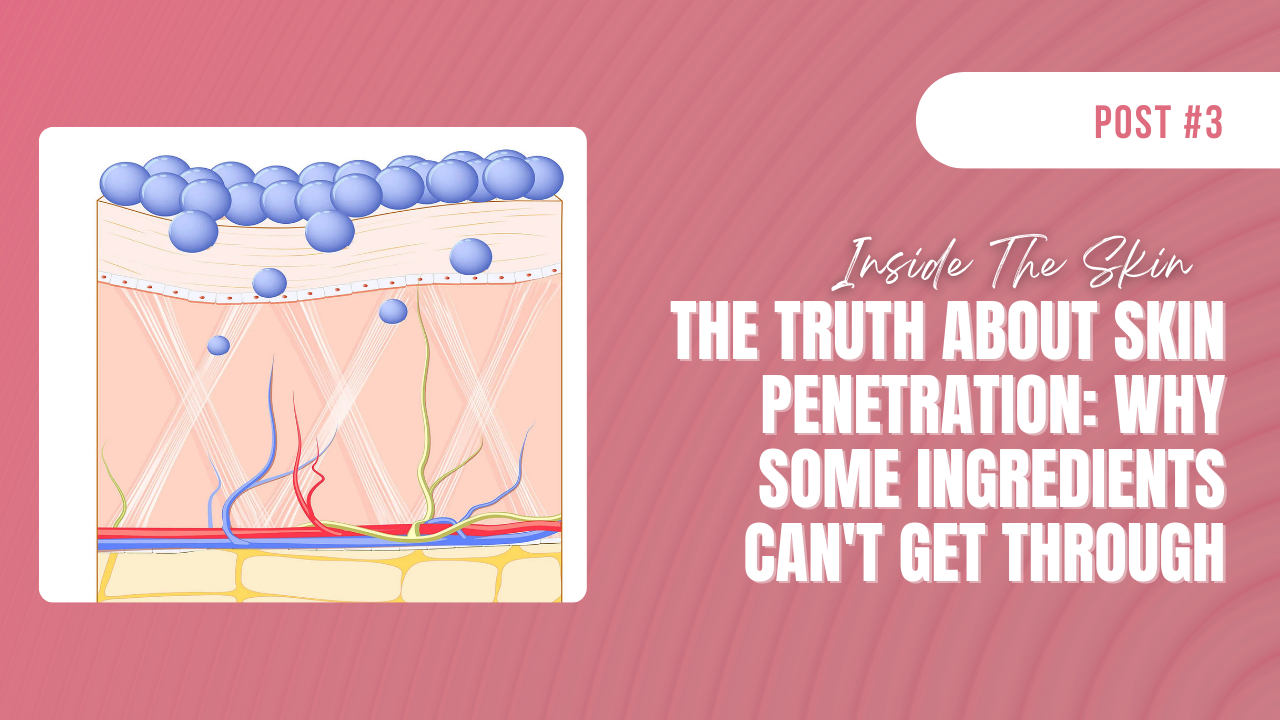
When you apply a serum, cream, or lotion, have you ever wondered: “How deep does this actually go?” One of the most significant factors determining whether an ingredient can reach beneath the skin’s surface is its molecular size—more precisely, its molecular weight. In skincare science, molecular size often dictates how effective a product will be beyond surface-level hydration. That affects skin penetration. If a molecule is too large, no matter how powerful its potential benefits, it may never make it past the top layer of your skin.
Understanding molecular size helps demystify why some products work while others fall short. This post dives deep into the science of molecular weight, how it impacts absorption, and how formulators overcome these challenges to create effective skincare products.
Why Molecular Size Matters in Skin Penetration
The skin is the body’s largest organ, and its primary function is protection. The outermost layer, the stratum corneum, acts as a gatekeeper, allowing in essential substances like oxygen or moisture to some extent while keeping out environmental aggressors, pathogens, and unnecessary molecules.
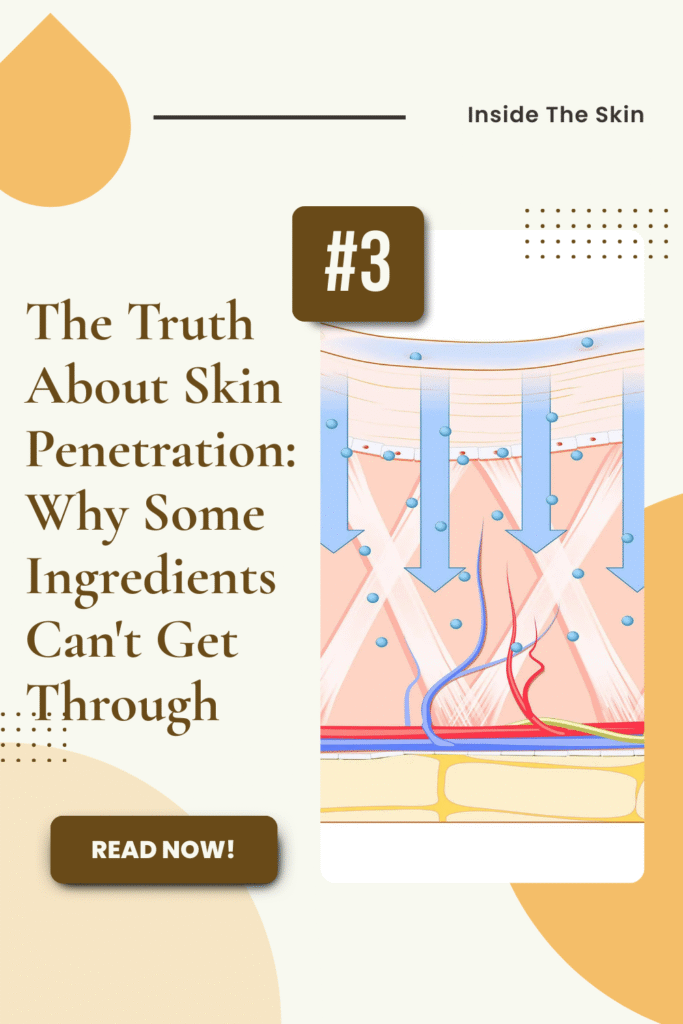
Molecular size becomes a crucial factor because the skin is not freely permeable to molecules. Think of the stratum corneum like a brick wall: the skin cells (corneocytes) are the bricks, and the lipids (fatty substances) that hold them together are the mortar. For any molecule to get through this wall, it must be small enough to slip between these bricks.
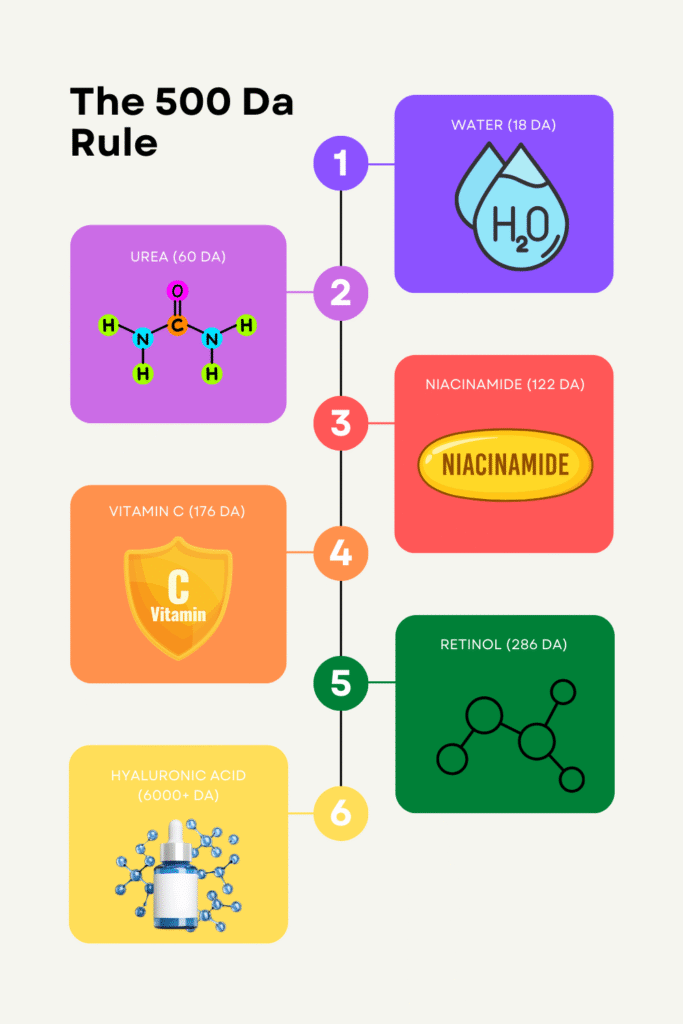
The 500 Dalton Rule: The Golden Threshold
In dermatological research, the 500 Dalton Rule is a well-established principle. It states:
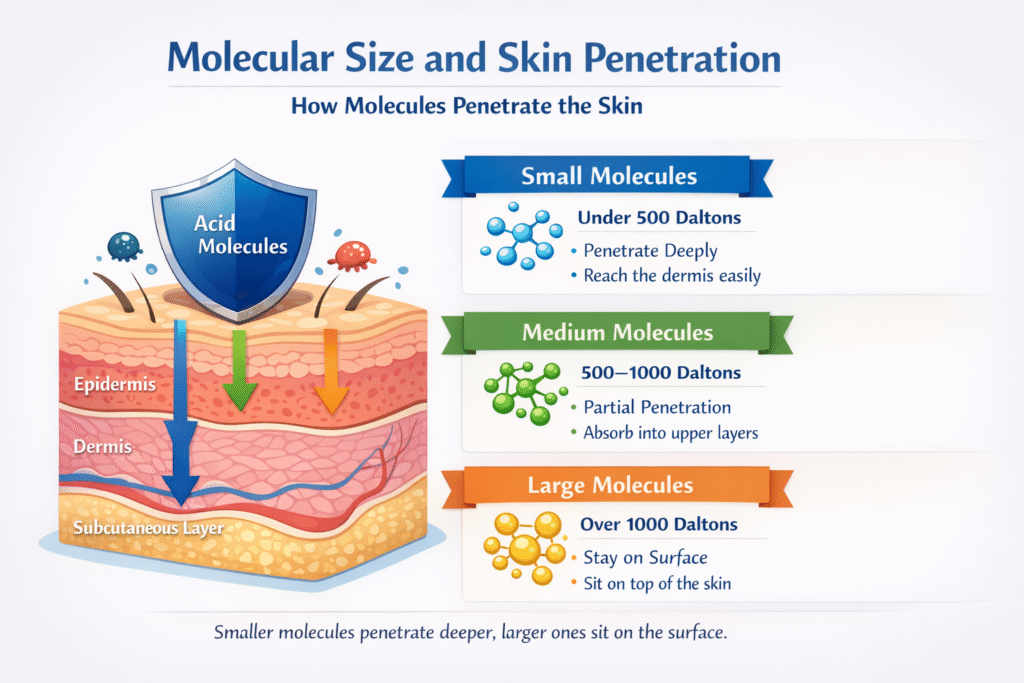
Molecules with a molecular weight greater than 500 Daltons (Da) cannot effectively penetrate the skin barrier.
This rule was derived from pharmaceutical studies involving transdermal drug delivery. Researchers observed that only molecules smaller than 500 Da could passively diffuse through the intact stratum corneum and reach the viable layers of the skin or bloodstream.
Dalton (Da)
A unit of molecular weight; 1 Da = 1 atomic mass unit
Examples for context:
- Water: 18 Da
- Urea: 60 Da
- Vitamin C (L-ascorbic acid): 176 Da
- Retinol: 286 Da
- Niacinamide: 122 Da
- Hyaluronic acid (high molecular weight): 6,000+ Da
So while hyaluronic acid is an excellent humectant, its larger versions only work on the skin’s surface unless specifically formulated to penetrate (e.g., using low molecular weight fractions).
Routes of Skin Penetration: More Than Just Size
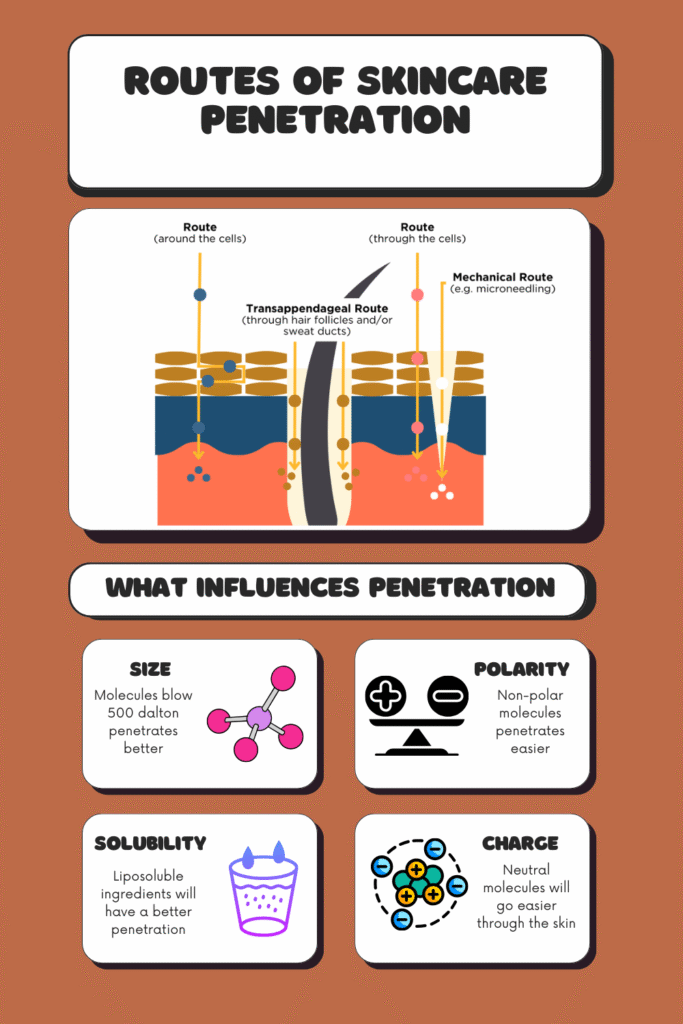
While molecular weight is important, it’s not the only factor. Molecules penetrate the skin via three primary pathways:
- Intercellular route: Molecules weave between skin cells, navigating the lipid matrix. Most common for skincare ingredients.
- Transcellular route: Molecules pass directly through skin cells. This is rare and challenging because it involves both lipophilic and hydrophilic transitions.
- Appendageal (follicular) route: Molecules enter via hair follicles or sweat glands. This bypasses the dense stratum corneum, but it accounts for only about 0.1% of the total skin surface area.
The effectiveness of these pathways is influenced by several molecular characteristics:
- Size (must be <500 Da)
- Polarity (non-polar/lipophilic molecules penetrate better)
- Solubility (lipid-soluble molecules fare better than water-soluble ones)
- Charge (neutral molecules generally penetrate more easily)
Real-World Application: Ingredients That Penetrate
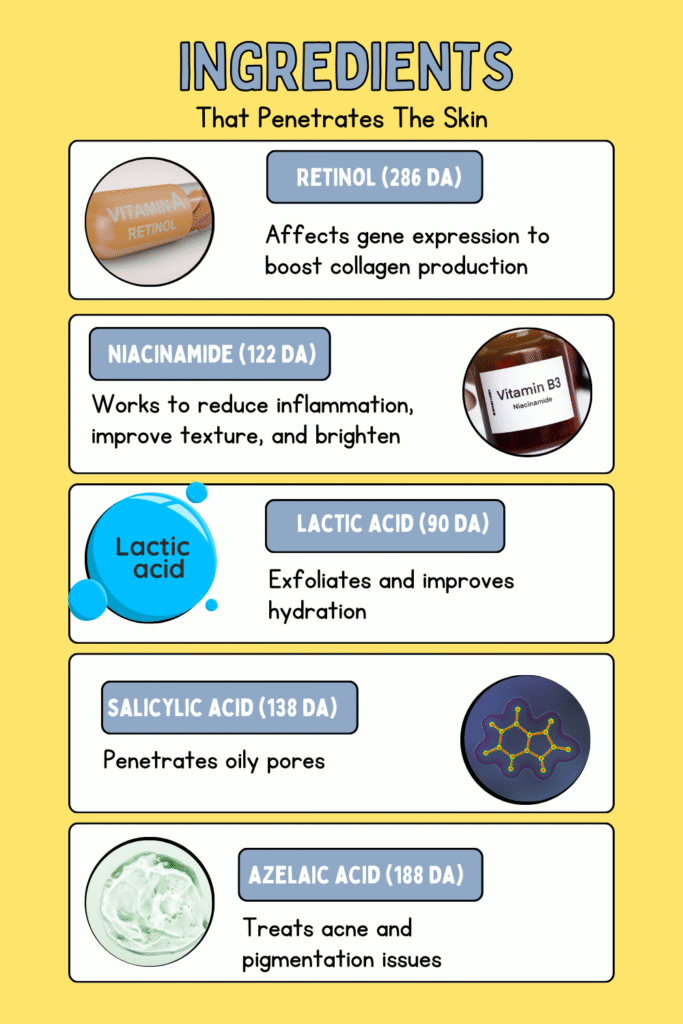
The following commonly used ingredients have low molecular weights, allowing them to penetrate the skin effectively:
- Retinol: 286 Da — penetrates and affects gene expression to boost collagen production.
- Niacinamide: 122 Da — penetrates well and works to reduce inflammation, improve texture, and brighten.
- Lactic acid: 90 Da — an alpha hydroxy acid that exfoliates and improves hydration.
- Salicylic acid: 138 Da — a beta hydroxy acid known for its ability to penetrate oily pores.
- Azelaic acid: 188 Da — treats acne and pigmentation issues.
Because of their smaller size, these ingredients can reach the viable epidermis or upper dermis, interacting with living cells and stimulating change.
Big Molecules, Small Reach (no Skin Penetration)
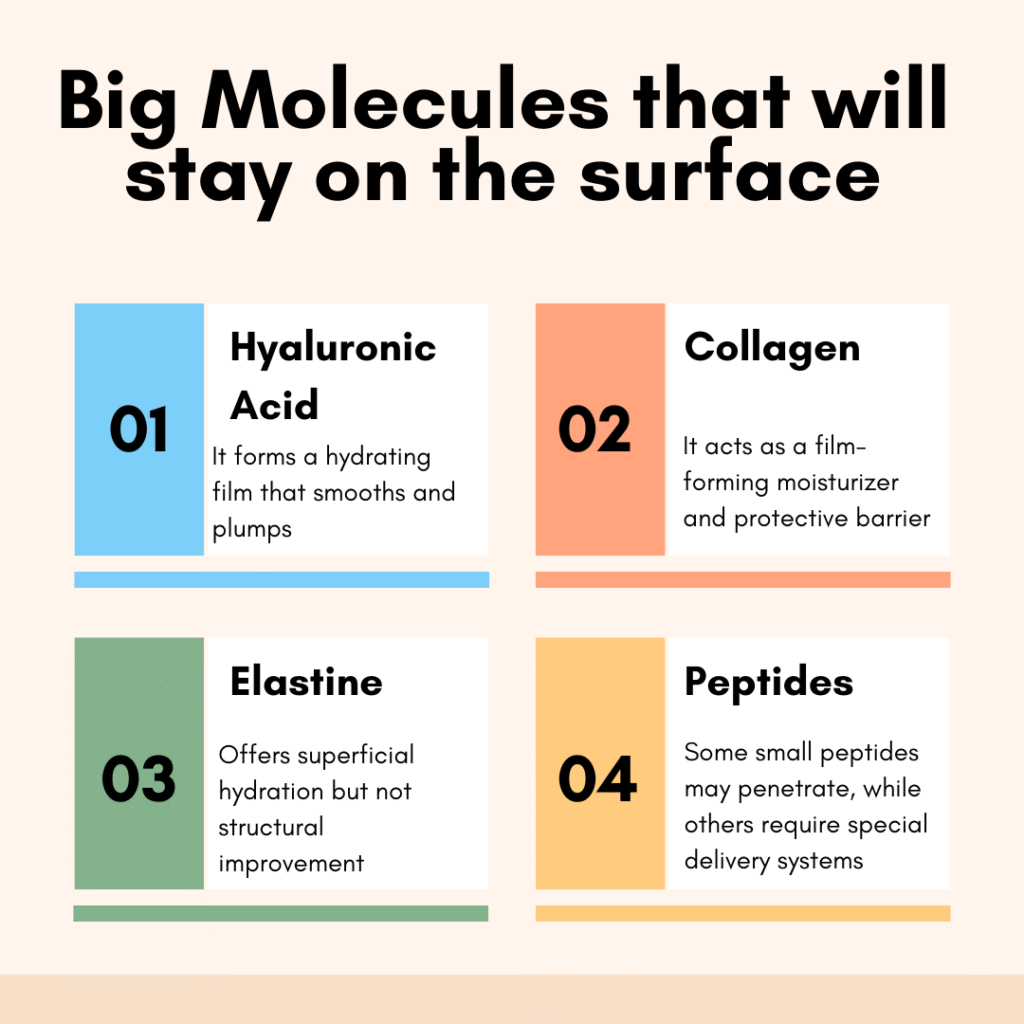
Larger molecules may still offer benefits, but typically only on the skin’s surface:
- Hyaluronic Acid: While high-molecular-weight HA doesn’t penetrate, it forms a hydrating film that smooths and plumps.
- Collagen: Too large to penetrate. It acts as a film-forming moisturiser and protective barrier.
- Elastin: Similar to collagen, it offers superficial hydration but not structural improvement.
- Peptides: Vary widely. Some small peptides may penetrate, while others require encapsulation or special delivery systems.
It’s important to understand that “not penetrating” doesn’t mean “not useful”—surface hydration and barrier support are critical aspects of skin health.
Breaking the Barrier: Advanced Delivery Systems
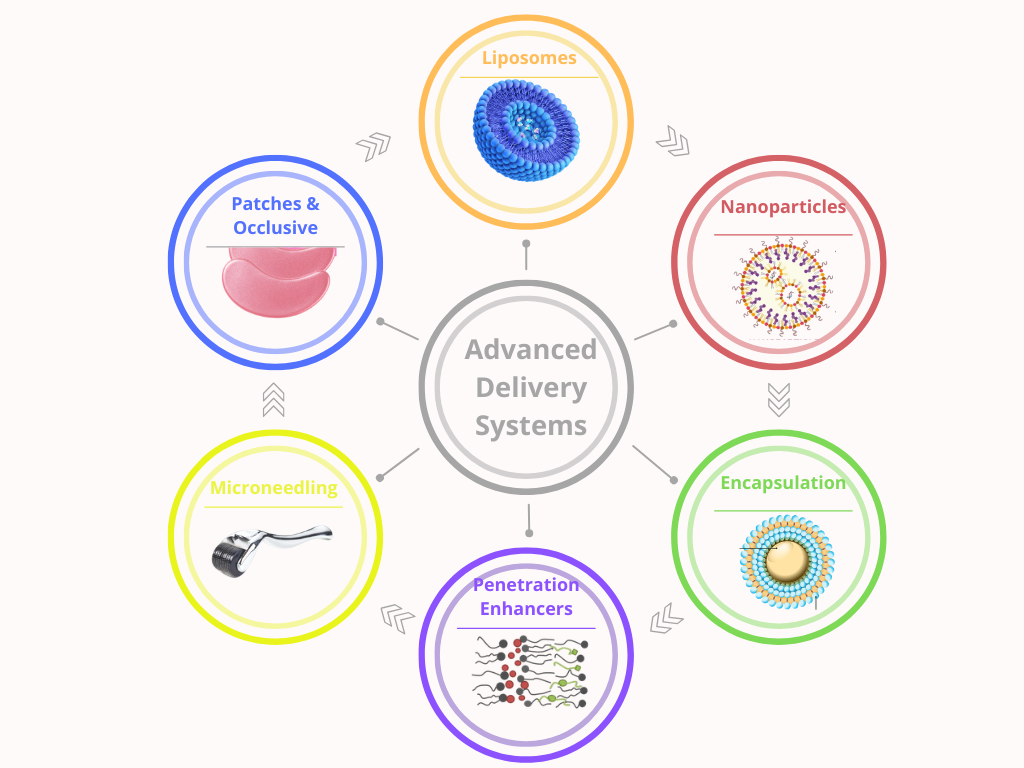
To improve penetration, especially for larger or unstable molecules, cosmetic chemists use innovative delivery systems:
- Liposomes: Tiny spherical vesicles made of phospholipids that carry actives and fuse with skin membranes.
- Nanoparticles: Extremely small particles that carry actives into deeper layers. Useful, but still under regulatory scrutiny.
- Encapsulation: Coating active ingredients in a protective shell that helps them reach the target site intact.
- Penetration enhancers: Ingredients like ethanol, propylene glycol, or essential oils that disrupt the stratum corneum’s lipid structure.
- Microneedling: A professional technique creating micro-channels to boost the delivery of topicals.
- Patches and occlusive dressings: Increase absorption by trapping moisture and holding ingredients against the skin.
The Role of Formulation and pH
Even small, powerful ingredients like retinol or vitamin C can be ineffective if not properly formulated. pH is a major factor:
- L-ascorbic acid (Vitamin C) is most effective at a pH < 3.5
- AHA/BHA acids work best at lower pH levels (around 3.0–4.0)
Vehicle choice also matters. Oil-based or emulsion systems tend to improve the penetration of lipid-soluble molecules, while water-based formulations favour hydrophilic compounds.
Setting Realistic Expectations
Consumers often expect topical products to deliver dramatic results quickly. But even with optimal molecular size and advanced delivery, skin absorption is still a gradual process. Real change takes time—weeks to months of consistent use.
Furthermore, not every product needs to penetrate deeply. Moisturisers, sunscreens, and cleansers often work best right where they are—on the surface.
Conclusion
In the world of skincare, size truly matters. The molecular weight of an ingredient is one of the biggest determinants of its ability to reach and impact deeper skin layers. While small molecules like retinol or niacinamide can stimulate cellular changes, larger ones like hyaluronic acid or collagen serve more protective and hydrating functions on the surface.
Armed with this knowledge, you can decode ingredient lists, interpret marketing claims more critically, and choose products that align with your skincare goals—whether you’re looking for deep rejuvenation or barrier support.
As skincare technology continues to evolve, delivery systems and innovative formulations will keep pushing the boundaries of what’s possible through the skin. But one thing remains clear: when it comes to skin penetration, under 500 Daltons is where the magic begins.
Bear in mind that some of the links in this post are affiliate links and if you go through them to make a purchase I will earn a commission. Keep in mind that I link these companies and their products because of their quality and not because of the commission I receive from your purchases. The decision is yours, and whether or not you decide to buy something is completely up to you.