Have you ever stopped to think about what actually happens when you apply your favourite skincare products? Do you know how skin absorption occurs?
Do those carefully chosen ingredients really sink into your skin—or do they simply sit on the surface?
More importantly, if absorption does happen, how do ingredients move through the skin layers?
Understanding skin absorption is the first step to understanding why some products work beautifully, while others seem to do very little. In today’s post, we’re breaking down two key absorption mechanisms: passive diffusion and active transport. Together, these processes determine how skincare ingredients enter the skin and how effective they can truly be.
What Is Skin Absorption?
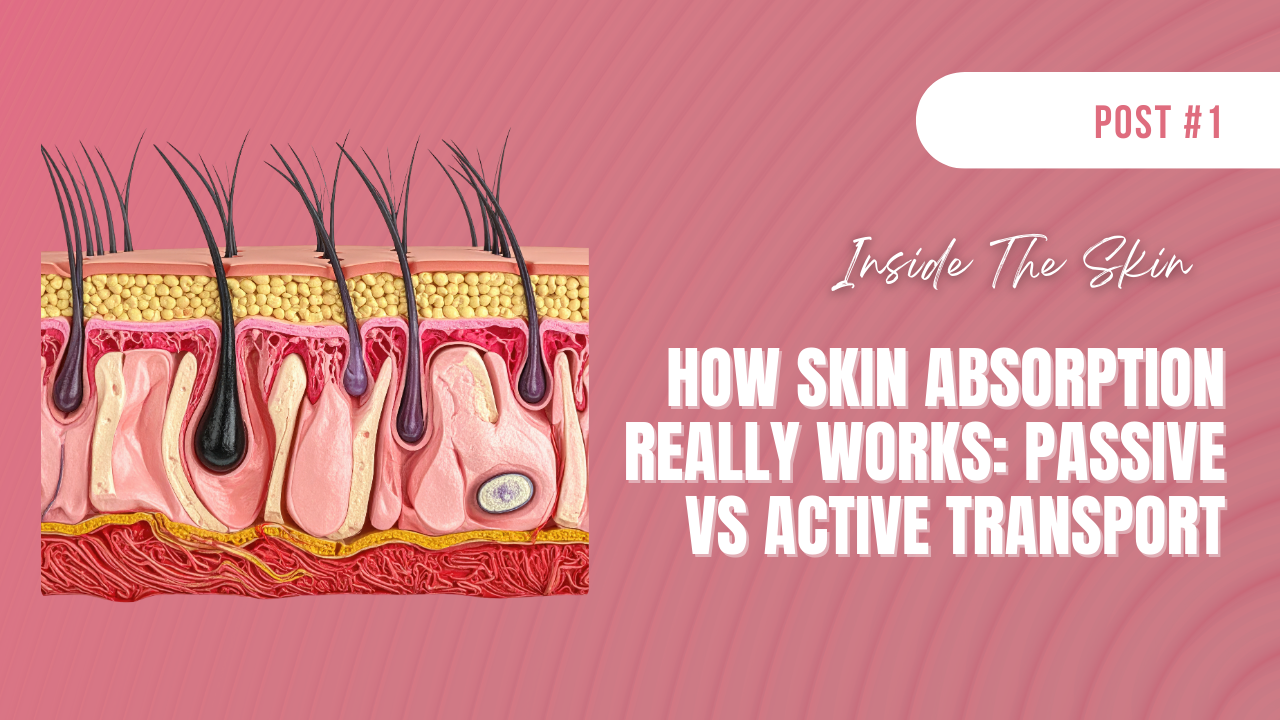
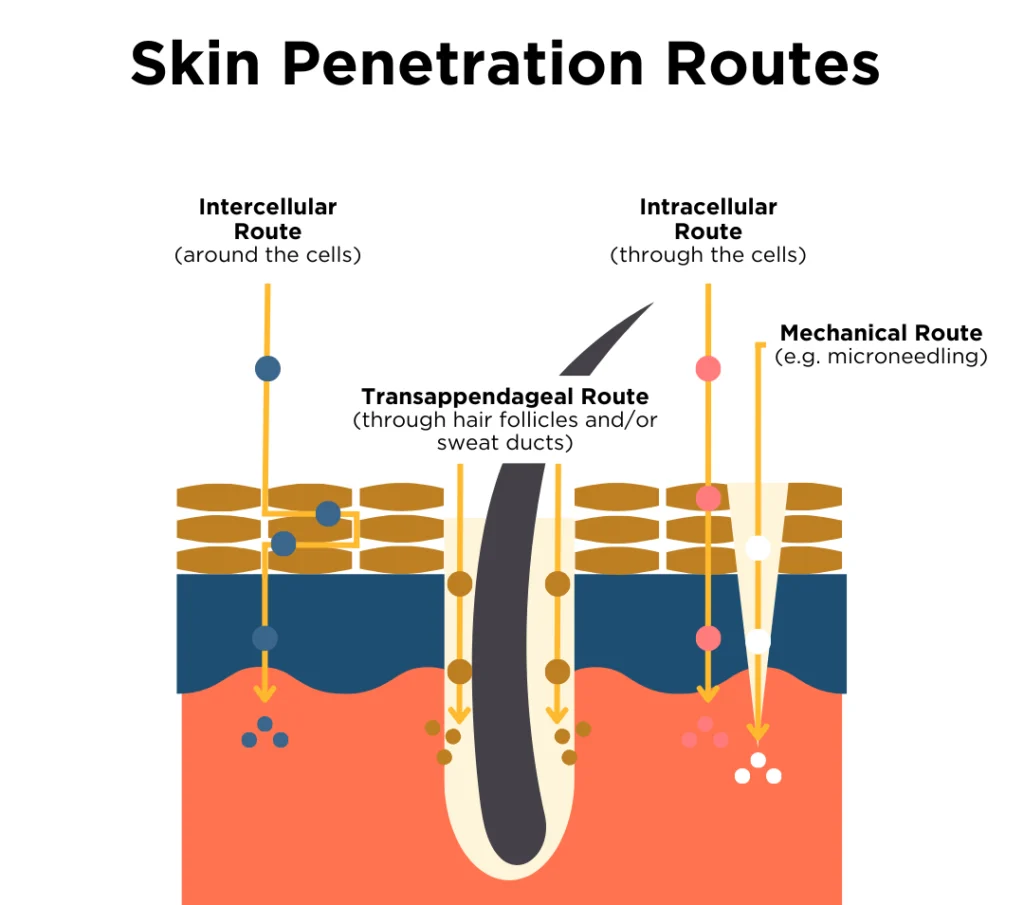
Skin absorption is the process by which ingredients move from the surface of the skin into deeper layers, where they can start to work. However, this process is far more complex than simply applying a product and hoping for results.
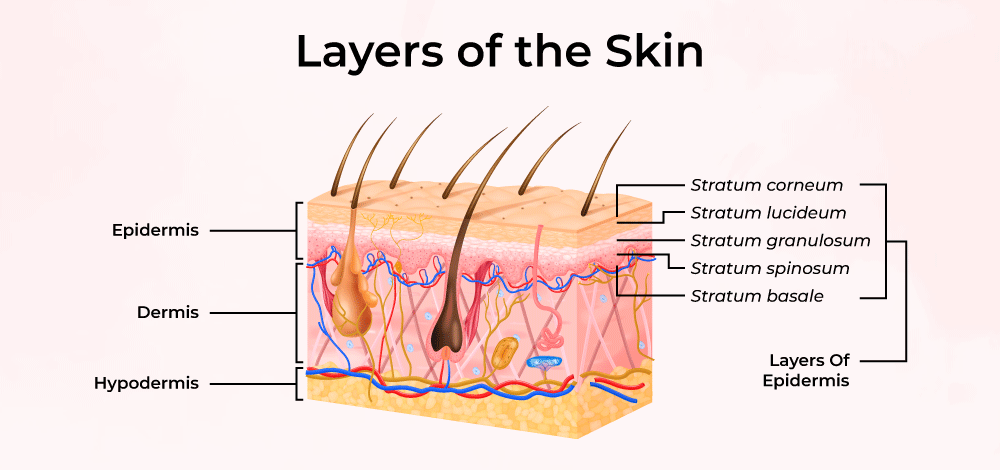
That’s because skin is not just a flat surface. Instead, it’s a multi-layered protective barrier designed to keep harmful substances out.
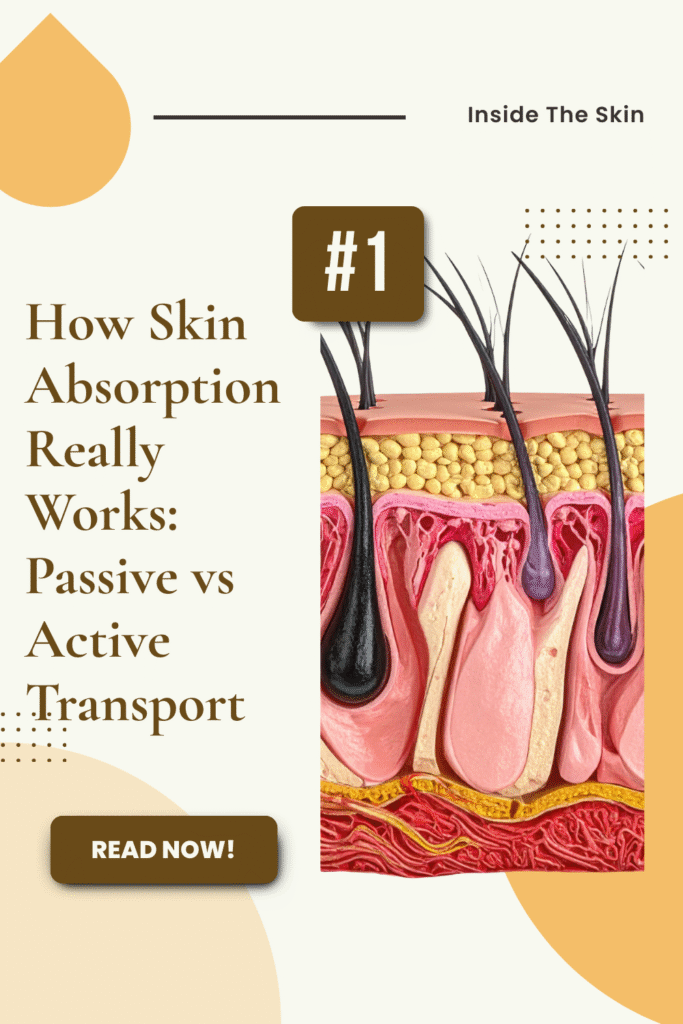
At the very top sits the epidermis, which plays a critical role in absorption. Within this layer lies the stratum corneum—a tough outer shield made of dead skin cells and lipids. Its job is simple but vital: to regulate what gets in and what stays out.
Below this barrier lies the dermis, where blood vessels, nerves, and structural proteins live. For many active ingredients to make a meaningful difference, they must move past the stratum corneum and reach this deeper layer.
This is where absorption mechanisms come into play.
Skin Absorption by Passive Diffusion: The Simple Pathway
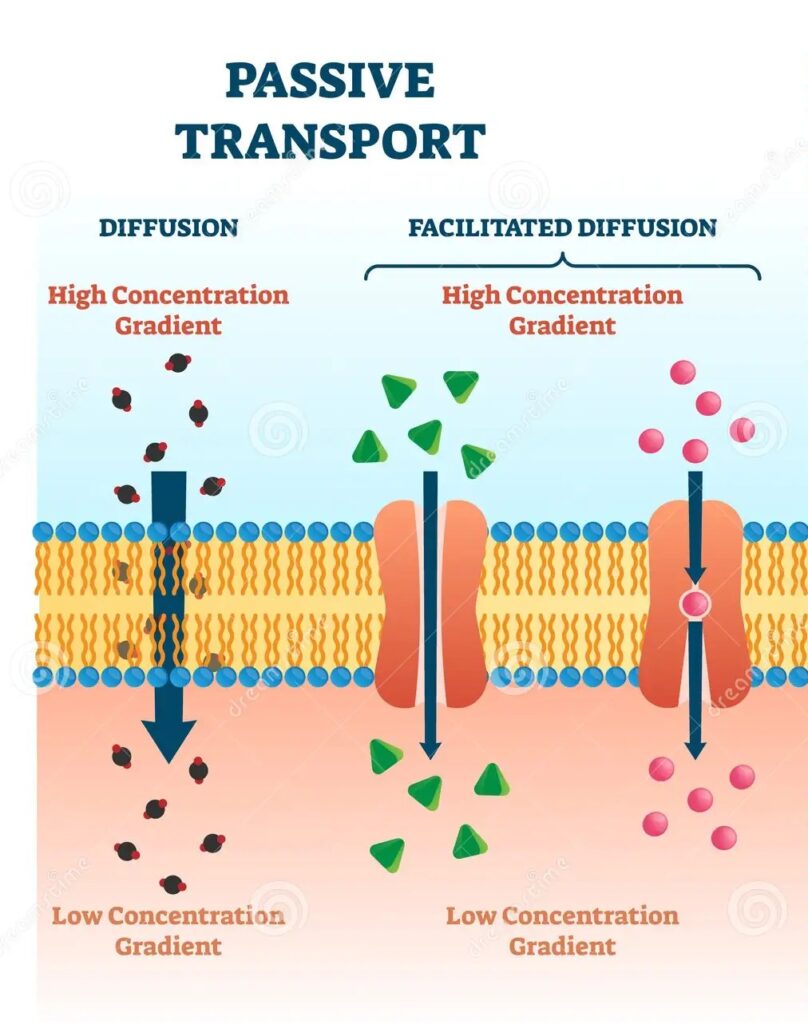
The first mechanism we’ll look at is passive diffusion, which is the most common and natural way that our skin uses to absorb most skincare ingredients.
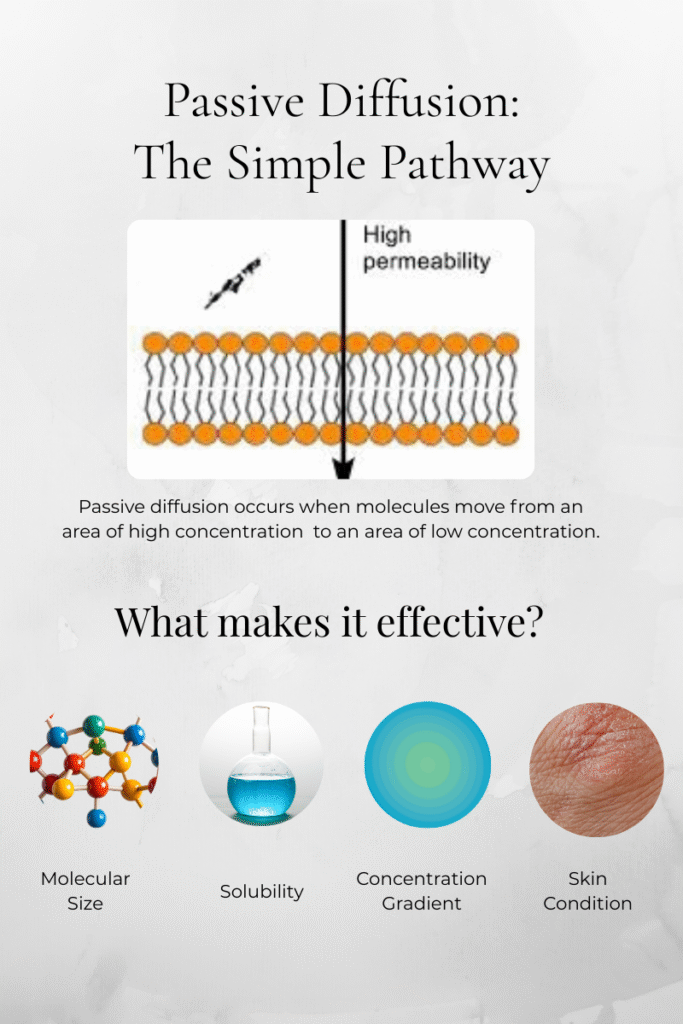
Passive diffusion occurs when molecules move from an area of high concentration (on the surface of your skin) to an area of low concentration (inside the skin’s layers) without requiring any energy. Essentially, it’s a process of equilibrium. Think of it as ingredients “drifting” into the skin, much like how a drop of food colouring diffuses in water. The movement is spontaneous, and the molecules don’t need help to get through the skin barrier.
What Makes Passive Diffusion Effective?
Several factors influence how easily ingredients can diffuse through the skin.
First, molecular size matters.
Smaller molecules pass through the skin more easily. This is why ingredients like retinol and vitamin C, which have relatively low molecular weight, can penetrate the epidermis more effectively.
In contrast, larger molecules—such as collagen or hyaluronic acid—struggle to move deeply and often remain closer to the surface.
Next, solubility plays a key role.
Because the stratum corneum contains lipids, fat-soluble (lipophilic) ingredients diffuse more easily. Retinoids and many oils fall into this category.
On the other hand, water-soluble (hydrophilic) ingredients tend to stay in the outer layers unless the formulation helps them penetrate.
The concentration gradient is also important.
Ingredients move faster when there is a greater difference between surface concentration and internal concentration. This is why serums—often more concentrated—tend to absorb more quickly than thicker creams.
Finally, skin condition affects absorption.
Well-hydrated, healthy skin allows for more even diffusion. In contrast, compromised or very dry skin can disrupt absorption, leading to unpredictable results.
Skin Absorption by Active Transport: The Energy-Dependent Route
While passive diffusion is common, it isn’t always enough. This is where active transport comes in.
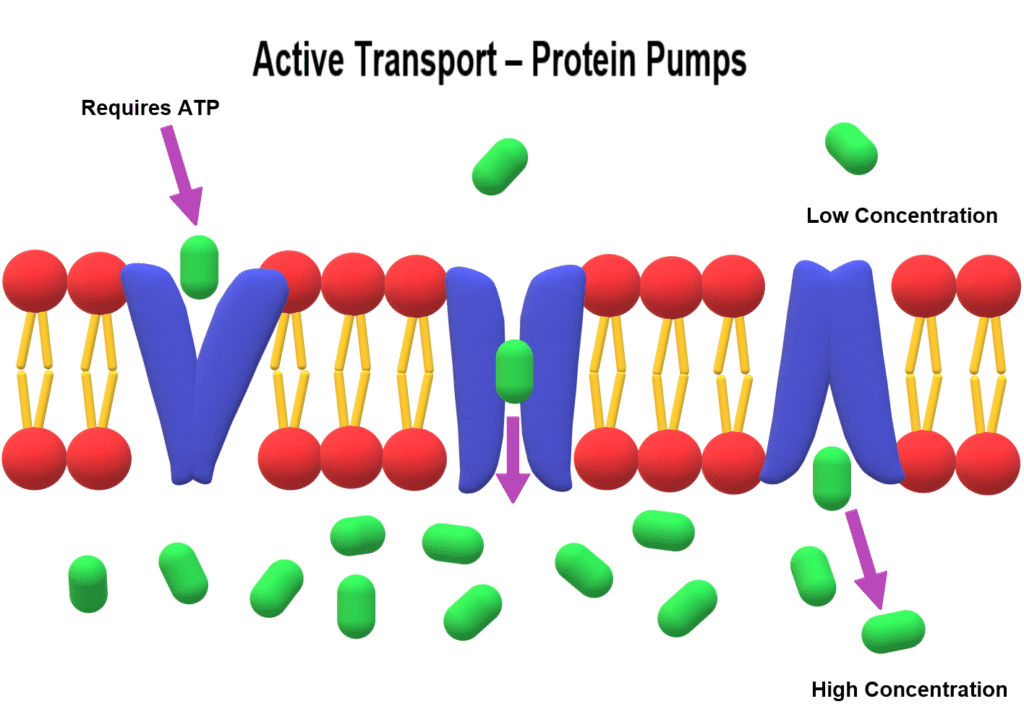
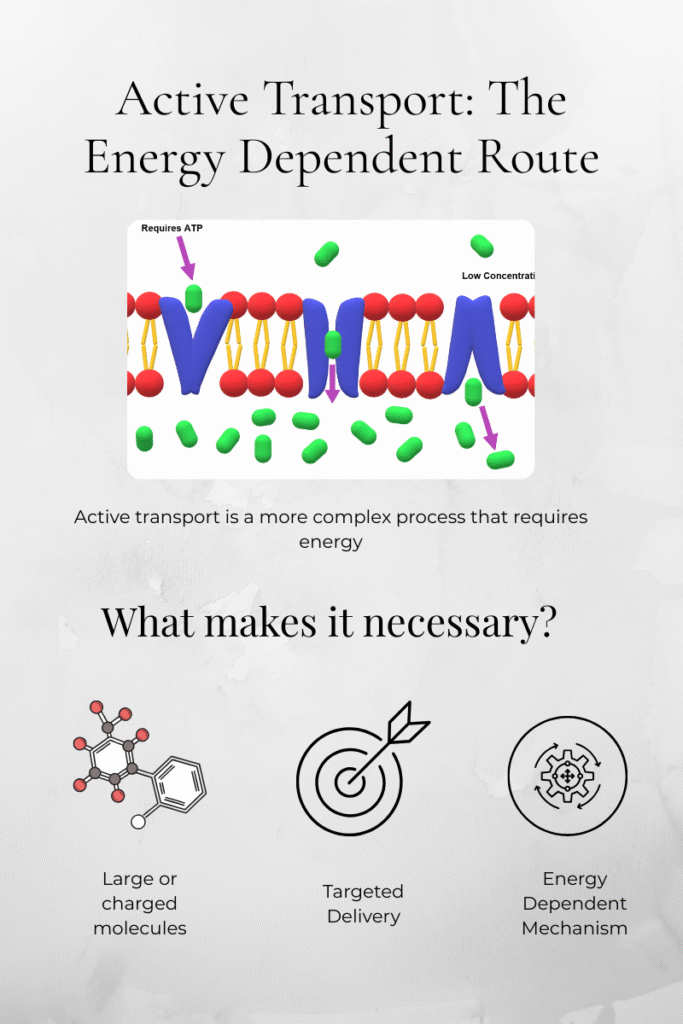
Unlike diffusion, active transport requires energy. Ingredients using this pathway cannot simply drift into the skin. Instead, they are actively moved by specialised carrier systems within skin cells.
These carriers help shuttle specific molecules across the skin barrier and into deeper layers. As a result, this process is more controlled and targeted.
What Makes Active Transport Necessary?
- Large or Charged Molecules:
- Active transport is necessary for larger or charged molecules that cannot pass through the skin via diffusion. These molecules need help to cross the skin’s barrier. For example, ingredients like peptides, growth factors, or certain vitamin C derivatives need to be transported via active transport. These molecules are too big or charged to cross the barrier on their own.
- Targeted Delivery:
- Active transport is also necessary when a specific ingredient needs to target a certain area of the skin. For example, if you’re using an anti-ageing serum with peptides, these peptides may need to go to specific areas of the dermis to stimulate collagen production. Active transport ensures that these ingredients are delivered where they’re needed most.
- Energy-Dependent Mechanisms:
- As mentioned earlier, this process requires energy. The energy necessary for active transport comes from the body’s natural mechanisms. This active transport systems utilise the ATP (adenosine triphosphate) in the skin’s cells to push ingredients into deeper layers. This energy-dependent process is more precise and requires more control than passive diffusion.
Why Does This Matter for Your Skincare?
Understanding absorption helps explain why products behave so differently on the skin.
First, not all products need to penetrate deeply.
Ingredients like ceramides, oils, and butters work best on the surface. Their role is to protect, soften, and support the skin barrier—not to travel into the dermis.
Second, formulation matters just as much as ingredients.
For larger or water-soluble molecules, delivery systems such as liposomes or encapsulation can significantly improve performance. Without them, even excellent ingredients may fall short.
Third, skin health influences results.
A strong, well-hydrated barrier improves ingredient performance overall. This is why barrier-supporting routines often make actives work better—not stronger.
Finally, not all actives behave the same way.
Retinoids and pure vitamin C mainly rely on passive diffusion. In contrast, peptides and growth factors often require more advanced delivery strategies.
Conclusion
Skin absorption is a complex process shaped by chemistry, biology, and formulation science. By understanding the difference between passive diffusion and active transport, you gain clearer insight into why certain products work—and why others don’t.
With this knowledge, choosing skincare becomes less about hype and more about function.
In our next post, we’ll dive into The Layers of the Skin: How Cosmetics Really Interact with Your Skin, where we’ll break down the structure of your skin and which layers are most affected by your skincare products.
Stay tuned for more science-backed insights in the Inside the Skin series!
And don’t forget to subscribe to our newsletter to stay updated on all the latest skincare science.
Bear in mind that some of the links in this post are affiliate links and if you go through them to make a purchase I will earn a commission. Keep in mind that I link these companies and their products because of their quality and not because of the commission I receive from your purchases. The decision is yours, and whether or not you decide to buy something is completely up to you.