If you’ve ever dusted on a setting powder or applied a silky eyeshadow, chances are you’ve come into contact with talcum powder, better known as talc. It is very common to find talc in skincare products because of its smooth texture and oil-absorbing properties. But in recent years, talc has become one of the most controversial ingredients in the beauty industry.
For many consumers, especially those with mature, sensitive, or dry skin, the question remains: Is talc harmful? Should I avoid it? Or is it safe when used correctly?
Let’s break down what talc really is, where it’s used, the ongoing debate surrounding its safety, and how to make an informed choice when reading your product labels.
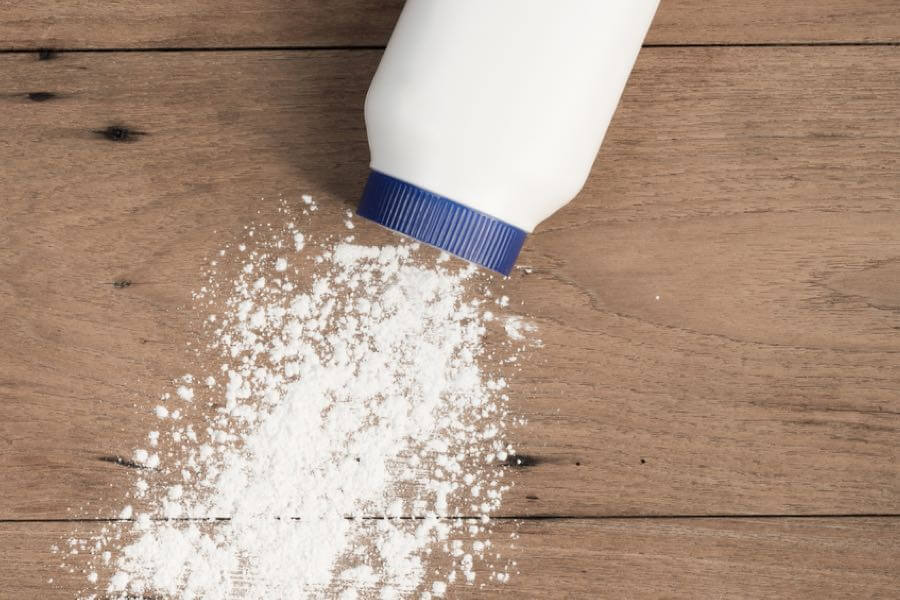
What Is Talcum (Talc)?
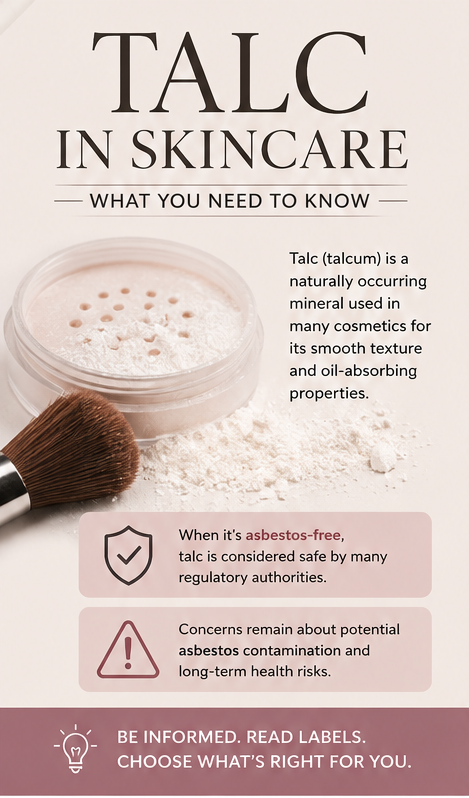
Talc is a naturally occurring mineral with a composition including magnesium, silicon, and oxygen. In its powdered form, its popular name is talcum powder, and it is one of the softest minerals in the world.
In cosmetics and skincare, it’s used for:
- Absorbs moisture and oil
- Improving spreadability in powders and creams
- Creating a silky, soft texture in products
- Matte finish in foundations and setting powders
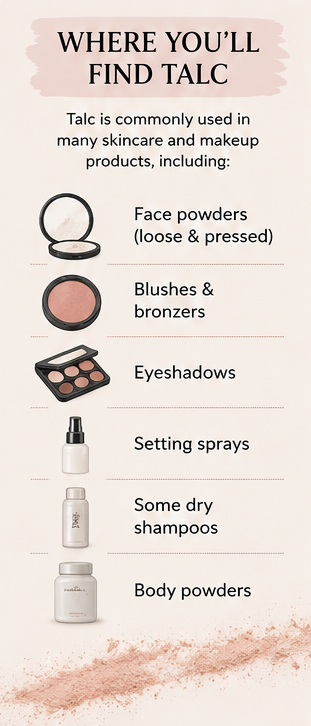
You’ll find talc in:
- Face powders (loose & pressed)
- Blushes and bronzers
- Eyeshadows
- Setting sprays
- Some dry shampoos
- Body powders
Why Has Talc in Skincare Become Controversial?
Asbestos Contamination Risks
Naturally mined talc can sometimes be contaminated with asbestos, a known carcinogen. This is because talc and asbestos deposits often occur near each other in the earth.
Asbestos-contaminated talc has been linked to serious health concerns, including lung disease and cancers, particularly mesothelioma and ovarian cancer.
While cosmetic-grade talc is required by law (in many countries) to be asbestos-free, regulations vary, and screening methods differ.
Did You Know?
In the U.S., talc in cosmetics is not required to undergo FDA pre-approval before sale—manufacturers are responsible for safety. In the EU and UK, cosmetic regulations are stricter.
Several lawsuits—most notably against Johnson & Johnson—claimed long-term use of talc-containing baby powders led to cancer. While some cases resulted in large settlements, the scientific evidence remains mixed and highly debated.
Is Talc in Skincare Dangerous?
When it’s asbestos-free, talc is considered safe by many regulatory authorities, including:
- The European Commission’s Scientific Committee on Consumer Safety (SCCS)
- The FDA (though they don’t test talc products themselves)
- Health Canada
However, critics point out that testing methods and transparency are inconsistent, and some believe there’s no truly safe way to guarantee talc purity in mined products.
Talc in Skincare and Makeup for Mature Skin
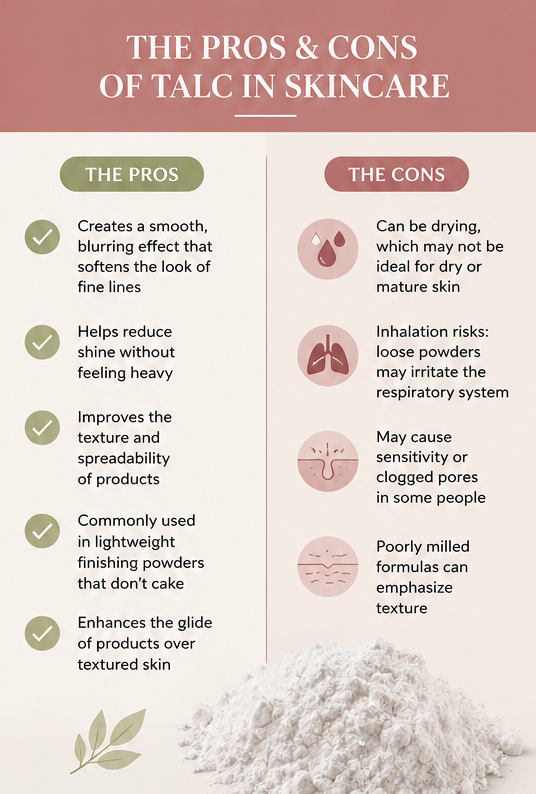
The Pros for Mature Skin:
The Cons:
Talc-Free Alternatives
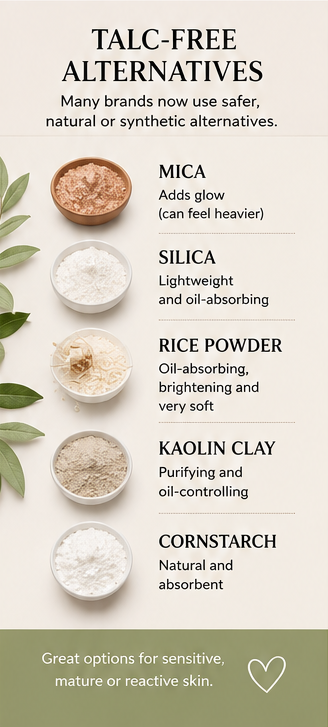
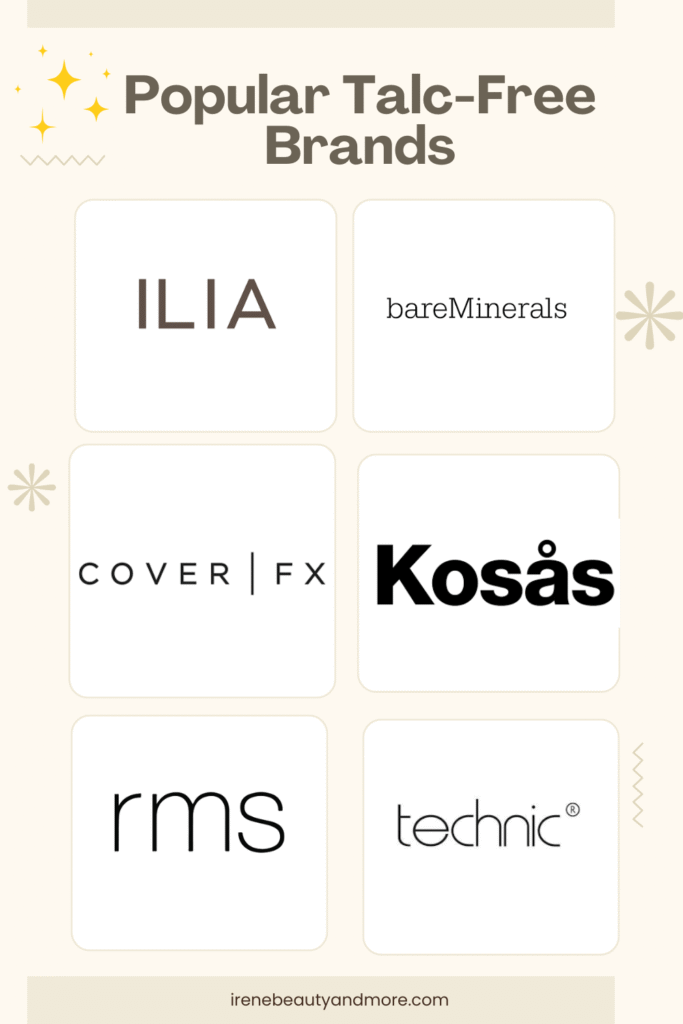
Many brands now offer talc-free formulations that use alternative base powders such as:
Should You Avoid Talc in Skincare?
Consider avoiding talc if:
- Your skin is sensitive, dry, or reactive
- You prefer minimal exposure to potentially contaminated minerals
- You use powders regularly and in large amounts
- Concerns about inhalation or ethical sourcing are important for you
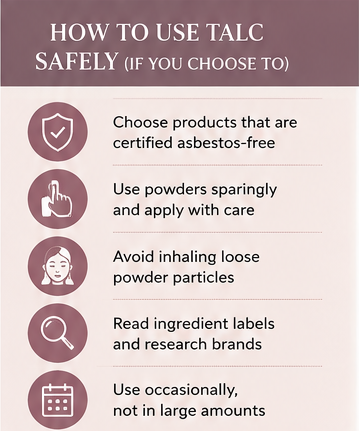
You may feel comfortable using talc-based products if:
- They are certified asbestos-free
- You use them occasionally or sparingly
- You apply them with care (e.g., lightly pressing powder, not spraying loose particles)
Final Thoughts
Talcum has been a beauty staple for decades, valued for its smoothing and mattifying properties. But with growing concerns around contamination, ingredient transparency, and health risks, more and more consumers are opting for talc-free beauty alternatives—especially those with mature or sensitive skin.
Whether or not you choose to avoid talc, being informed about ingredients empowers you to make the best decisions for your health, skin, and peace of mind.
Bear in mind that some of the links in this post are affiliate links and if you go through them to make a purchase I will earn a commission. Keep in mind that I link these companies and their products because of their quality and not because of the commission I receive from your purchases. The decision is yours, and whether or not you decide to buy something is completely up to you.