Rooibos in Skincare. The Red Tea Antioxidant Your Skin Will Love
If you’ve been exploring ingredient lists lately, you may have noticed rooibos extract quietly appearing in more skincare formulas, from serums to cleansers and masks. While it might not yet have the mainstream recognition of ingredients like hyaluronic acid or niacinamide, rooibos in skincare is quickly gaining attention for its gentle yet powerful skin benefits, particularly for dry, mature, and sensitive skin types.
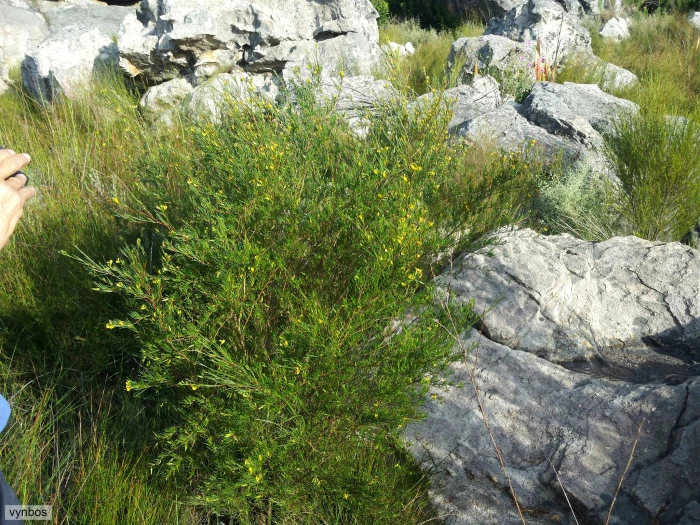
Derived from the leaves of the Aspalathus linearis plant, native to South Africa, rooibos has been consumed for centuries as a herbal tea. But beyond its soothing properties when ingested, its topical benefits are where things get especially interesting.
What makes rooibos unique is its rich concentration of rare antioxidants, combined with its anti-inflammatory and skin-calming effects. Unlike harsher actives, it delivers results without compromising the skin barrier — making it ideal for anyone dealing with dryness, irritation, or early signs of ageing.
In this guide, we’re going deep into the science, benefits, and practical uses of rooibos in skincare — and why it might be the underrated ingredient your routine is missing.
What is Rooibos Extract?
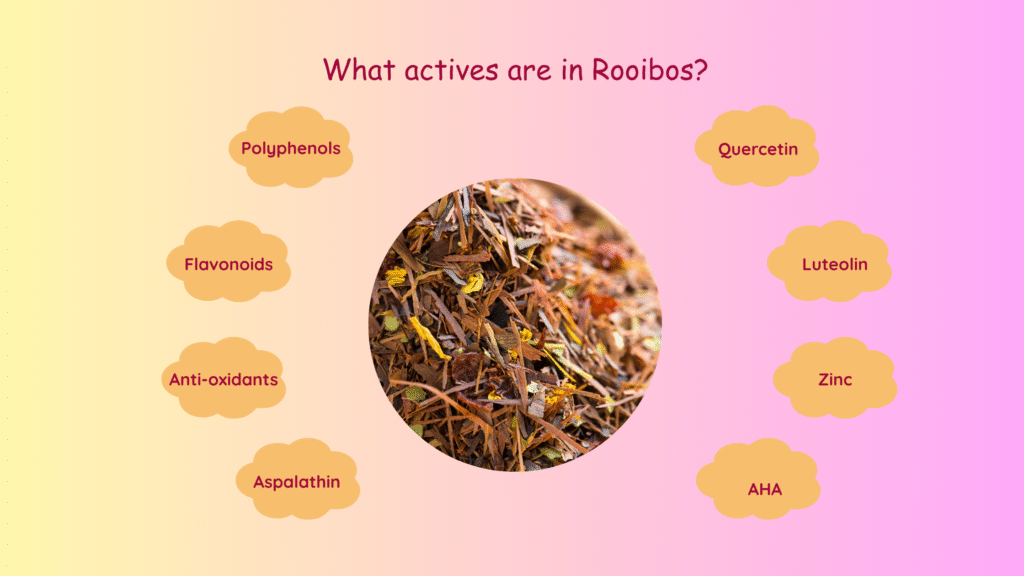
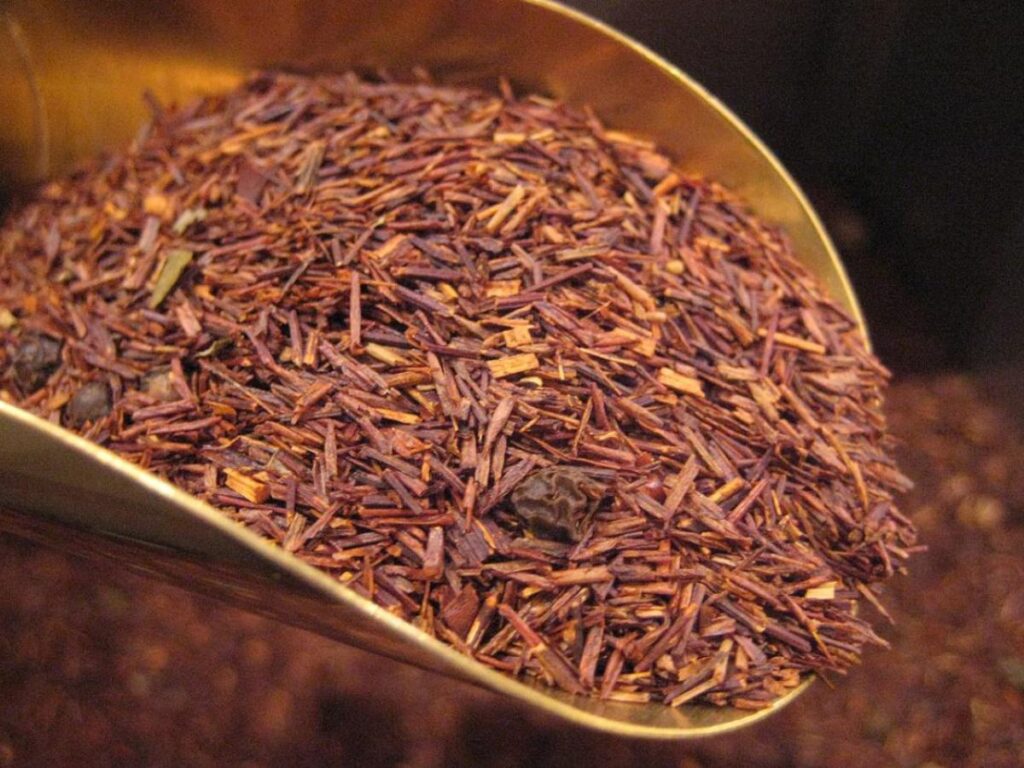
Rooibos extract comes from the fermented (or sometimes unfermented, known as green rooibos) leaves of the rooibos plant. It’s full of polyphenols, flavonoids, and unique antioxidants that help protect the skin from environmental stressors.
One of the standout compounds in rooibos is aspalathin, a rare antioxidant not commonly found in other plants. This gives rooibos a distinctive edge in skincare, particularly when it comes to neutralising free radicals and reducing oxidative stress.
Additionally, rooibos contains:
- Quercetin (anti-inflammatory)
- Luteolin (anti-ageing support)
- Zinc (helps with skin repair)
- Alpha hydroxy acids in trace amounts (gentle smoothing effect)
Because it’s naturally caffeine-free and low in tannins compared to other plant extracts, rooibos is also less irritating, making it suitable for even highly reactive skin.
Key Benefits of Rooibos in Skincare
1. Powerful Antioxidant Protection
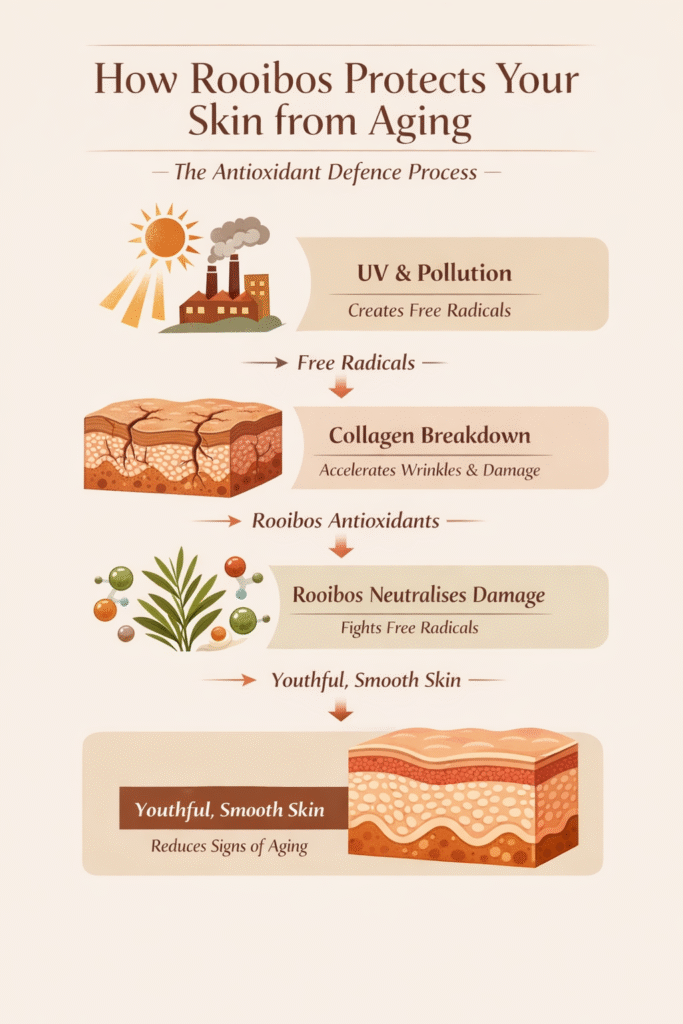
One of rooibos’ biggest strengths is its ability to combat free radical damage, which is a major contributor to premature ageing. Environmental aggressors like UV rays, pollution, and stress generate free radicals that break down collagen and elastin.
Rooibos in skincare helps neutralise these free radicals, slowing down:
- Fine lines and wrinkles
- Loss of elasticity
- Dull, tired-looking skin
For mature skin, this antioxidant support is essential in maintaining a more youthful appearance over time.
2. Soothing and Anti-Inflammatory
If your skin tends to react easily, rooibos is incredibly beneficial. Its anti-inflammatory compounds help reduce:
- Redness
- Irritation
- Sensitivity flare-ups
This makes it particularly useful for conditions like rosacea-prone skin, eczema tendencies, or post-treatment sensitivity (like after microneedling or exfoliation).
Unlike stronger actives, rooibos works with your skin barrier, not against it.
3. Deep Hydration Support
While rooibos isn’t a humectant like hyaluronic acid, it supports hydration by:
- Strengthening the skin barrier
- Reducing transepidermal water loss (TEWL)
- Enhancing moisture retention
For dry and mature skin, this translates to plumper, smoother, more comfortable skin.
4. Anti-Ageing Benefits
Rooibos supports anti-ageing in a more holistic way compared to aggressive actives. Instead of forcing rapid cell turnover, it works by:
- Protecting collagen from degradation
- Supporting skin repair
- Reducing oxidative stress
Over time, this leads to:
- Softer fine lines
- Improved skin texture
- A more even, radiant complexion
5. Helps with Acne and Breakouts
Interestingly, rooibos also contains natural antibacterial properties. Combined with its soothing nature, it can help:
- Calm inflamed breakouts
- Reduce redness
- Support healing
Because it’s non-stripping, it’s ideal for adult acne, especially when skin is also dry or sensitive.
How Rooibos in Skincare Works (The Science)
Rooibos operates primarily through its polyphenol content, which acts at a cellular level to reduce oxidative stress.
When free radicals accumulate, they trigger a cascade of damage:
- Breakdown of collagen
- Increased inflammation
- Impaired skin barrier
Rooibos interrupts this process by:
- Donating electrons to stabilise free radicals
- Reducing inflammatory signalling pathways
- Supporting enzymatic repair mechanisms
This makes it particularly effective in preventative skincare, helping maintain skin health rather than correcting damage after it occurs.
Who Should Use Rooibos in Skincare?
Rooibos is one of those rare ingredients that suits almost everyone, but it’s especially beneficial for:
- Dry skin
- Mature skin
- Sensitive or reactive skin
- Skin with redness or inflammation
- Barrier-damaged skin
If your skin struggles with stronger actives like retinol or acids, rooibos is an excellent alternative for maintaining results without irritation.
Are There Any Side Effects?
Rooibos is one of the safest botanical ingredients used in skincare, largely due to its naturally low reactivity profile and absence of harsh sensitising compounds. Unlike stronger actives such as retinoids, exfoliating acids, or even certain essential oils, rooibos does not typically disrupt the skin barrier or trigger inflammatory responses, which is why it is so frequently present in formulations designed for sensitive, dry, or compromised skin.
Allergic reactions to rooibos in topical skincare are rare. This is partly because rooibos contains minimal volatile compounds and is naturally low in tannins compared to other botanical extracts, which reduces its likelihood of irritating. However, it is still important to remember that “natural” does not automatically mean universally tolerated. Any botanical ingredient has the potential to cause a reaction in highly sensitised individuals, particularly if the skin barrier is already impaired.
For this reason, you should always patch test before introducing a new rooibos-based product into your routine. This is especially important if you have a history of reactive skin, eczema, or contact dermatitis. A simple patch test behind the ear or along the inner arm can help determine whether your skin tolerates the formulation comfortably over a 24–48 hour period.
Overall, rooibos is a low-risk, high-tolerance ingredient, making it particularly valuable in skincare routines that prioritise barrier health and long-term skin comfort rather than aggressive short-term results.
Rooibos vs Other Antioxidants
Rooibos often gets compared to more widely recognised antioxidant ingredients such as green tea and vitamin C, but it behaves quite differently in terms of skin interaction, potency, and tolerance. Understanding these differences helps clarify where rooibos fits best within a skincare routine.
Rooibos vs Green Tea
Compared to green tea, rooibos is generally significantly gentler on the skin. While both ingredients are rich in polyphenols and offer strong antioxidant protection, green tea can sometimes contain higher levels of naturally occurring tannins and caffeine-related compounds, which may feel slightly more active or stimulating on very sensitive skin types. Rooibos, on the other hand, is naturally caffeine-free and lower in tannins, which makes it noticeably less irritating and more suitable for skin that is easily reactive, dehydrated, or prone to redness. In practical terms, this means rooibos can be used more consistently and across a wider range of skin conditions without the same risk of sensitivity flare-ups.
Rooibos vs Vitamin C
When compared to vitamin C, the differences become more about function than tolerance. Vitamin C is a highly potent antioxidant known for its strong role in brightening, pigmentation correction, and collagen stimulation. However, it can also be unstable in formulation and, depending on the derivative and concentration, may cause stinging or irritation in sensitive skin. Rooibos is less aggressive in its mechanism of action and does not directly target pigmentation in the same way. Instead, it focuses on reducing oxidative stress and calming inflammation at a cellular level. While it is less powerful for brightening specifically, it is far more stable, less reactive, and significantly better tolerated for daily use.
Because of this balance, rooibos is not positioned as a replacement for stronger actives like vitamin C, but rather as a supportive antioxidant that can be used consistently over time. It is particularly effective in routines where long-term skin health, barrier protection, and sensitivity management are the primary goals, rather than rapid visible correction.
🧠 Did You Know?
Rooibos is one of the few plants that contains aspalathin, a powerful antioxidant not found in green tea or most other botanical extracts.
How to Add Rooibos to Your Routine
Incorporating rooibos into a skincare routine is relatively simple, largely because it behaves as a supportive ingredient rather than an intensive active that requires careful buffering or cycling. This makes it especially appealing for those who prefer a low-maintenance but effective skincare approach, particularly for dry, mature, or sensitive skin types.
In the Morning
In the morning, rooibos works best when layered into a protective, antioxidant-focused routine. Starting with a gentle cleanser containing rooibos helps remove overnight build-up while maintaining skin comfort and barrier integrity. This is followed by a rooibos-based serum, which delivers concentrated antioxidant and soothing benefits directly into the skin. A well-formulated moisturiser then helps lock in hydration and reinforce the skin barrier, ensuring the skin remains supple throughout the day. The final and most essential step is SPF, which works synergistically with rooibos by protecting the skin from UV-induced oxidative stress, one of the primary causes of premature ageing.
In the Evening
In the evening, rooibos plays a slightly more restorative role. After cleansing, it can be used in the form of a treatment serum, essence, or calming mask, depending on the formulation. This is when rooibos is particularly beneficial, as it helps calm inflammation accumulated throughout the day from environmental exposure, stress, and general barrier fatigue. Following this, a nourishing cream or balm helps seal in the calming and reparative effects, supporting overnight skin regeneration.
One of the key strengths of rooibos is its compatibility with other well-established skincare ingredients. It layers particularly well with hyaluronic acid, which enhances hydration by attracting water into the skin. When combined with ceramides, rooibos supports barrier repair by reducing inflammation while ceramides rebuild lipid structure. It also works harmoniously with peptides, which help signal collagen production and improve skin firmness. Rather than competing with these ingredients, rooibos enhances the overall environment in which they function, making it a highly versatile addition to both minimal and advanced skincare routines.
Is rooibos good for ageing skin?
Yes, its antioxidant properties help reduce signs of aging and protect collagen.
Can rooibos replace vitamin C?
Not completely, but it’s a great alternative for sensitive skin.
Is rooibos safe for daily use?
Yes, it’s gentle enough for both morning and evening routines.
Does rooibos help with redness?
Absolutely, its anti-inflammatory properties make it ideal for calming skin.
Best Rooibos Skincare Products Available in the UK
While rooibos is still somewhat of an underrated ingredient in mainstream skincare, there are several excellent products available in the UK that make the most of its soothing and antioxidant properties. Whether you’re looking for a gentle cleanser, a hydrating serum, or a calming treatment mask, these formulations are worth considering—especially if your skin leans dry, sensitive, or mature.
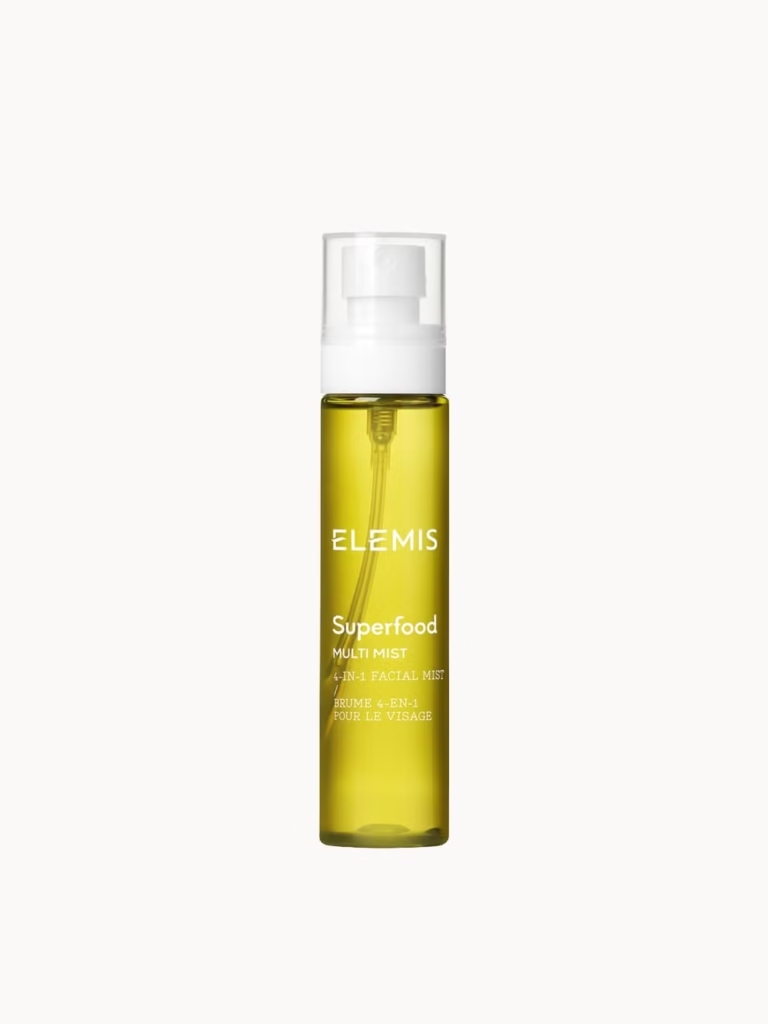
Elemis Superfood Multi Mist
Elemis Superfood Multi Mist is a refreshing facial mist designed to hydrate, revitalise, and comfort the skin throughout the day. While the formula focuses heavily on nutrient-rich “superfood” ingredients, rooibos contributes valuable antioxidant and soothing benefits that help protect the skin against daily environmental stressors. The mist has an ultra-fine spray that feels cooling and lightweight, making it ideal for layering between skincare steps or refreshing dry skin during the day. On mature or dehydrated skin, it gives an immediate boost of comfort and glow without disturbing makeup or leaving a greasy residue. The inclusion of rooibos helps balance the formula, offering gentle calming support while reinforcing the skin’s natural resilience.
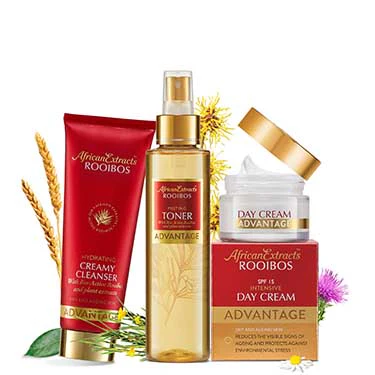
African Extracts Rooibos
African Extracts Rooibos is one of the most recognisable skincare brands dedicated entirely to the benefits of rooibos, building its formulations around the antioxidant-rich South African plant. The brand focuses heavily on gentle, affordable skincare that supports hydration, calming, and barrier protection, making it especially appealing for sensitive and dry skin types. Across the range, rooibos is used not simply as a marketing ingredient but as the foundation of the formulations, delivering antioxidant protection while helping soothe irritation and reduce visible stress in the skin. The products tend to have lightweight, easy-to-use textures and are designed for daily use, making the brand a good introduction to rooibos skincare for anyone wanting antioxidant support without harsh active ingredients.
My Recommendation for Dry, Mature Skin
If I had to choose one category to prioritise, it would be a rooibos-based serum, as this is where you’ll see the most noticeable benefits in terms of hydration, calming, and antioxidant protection.
Pairing that with a nourishing cleanser that includes rooibos creates a routine that supports the skin barrier while gradually improving overall skin quality—without the irritation that often comes with stronger actives.
Final Thoughts
Rooibos may not be the loudest ingredient in skincare, but it’s one of the most quietly effective. Its ability to protect, soothe, and support the skin barrier makes it especially valuable for dry and mature skin types.
If your routine feels too harsh or your skin is constantly reacting, rooibos offers a way to maintain results without compromising comfort. It’s not about aggressive transformation — it’s about consistent, long-term skin health.
And in many cases, that’s exactly what your skin needs.
Bear in mind that some of the links in this post are affiliate links and if you go through them to make a purchase I will earn a commission. Keep in mind that I link these companies and their products because of their quality and not because of the commission I receive from your purchases. The decision is yours, and whether or not you decide to buy something is completely up to you.