Why Balanced Skin pH Equals Better Skin
Maintaining healthy, glowing skin isn’t just about applying the right serum or moisturiser; it starts with a powerful yet often overlooked factor: the acid mantle. This thin, invisible film is your skin’s natural armour, and its slightly acidic skin pH plays a vital role in everything from moisture retention to how well your skincare products absorb. In this post, we’ll explore the science behind the acid mantle, why pH matters, and how cosmetic ingredients interact with this crucial system.
What Is the Acid Mantle?
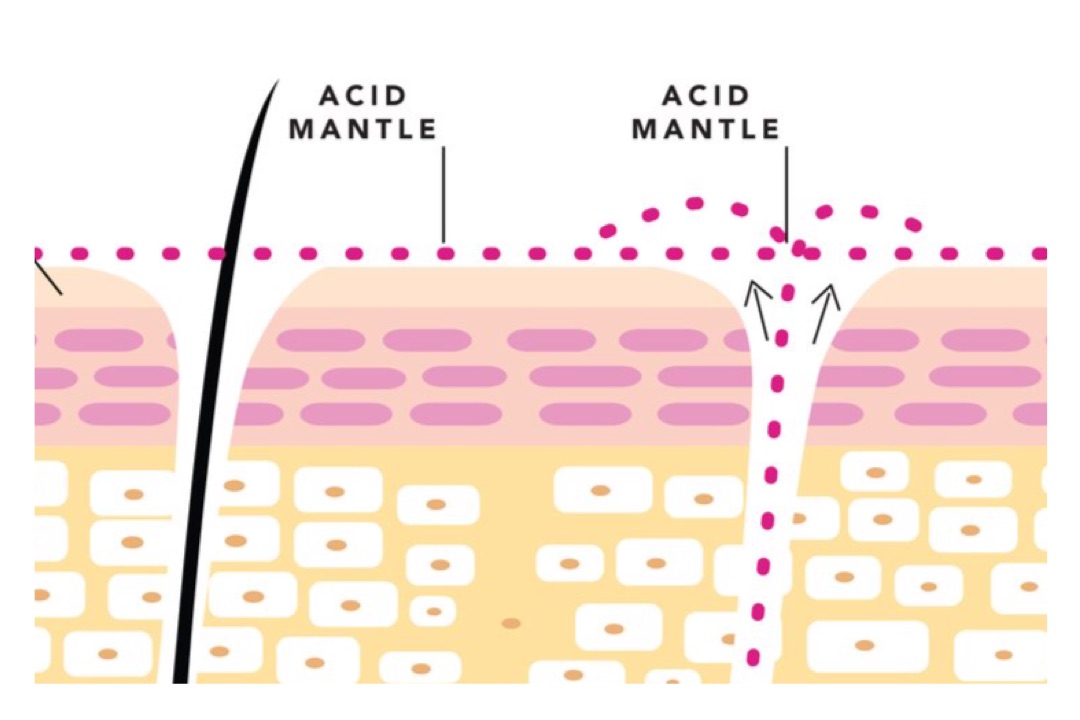
The acid mantle is a delicate, slightly acidic film that sits on the surface of the skin. Composed of sebum (natural oils), sweat, dead skin cells, and other secretions, it helps to maintain the skin’s integrity and protect against pathogens, environmental toxins, and moisture loss.
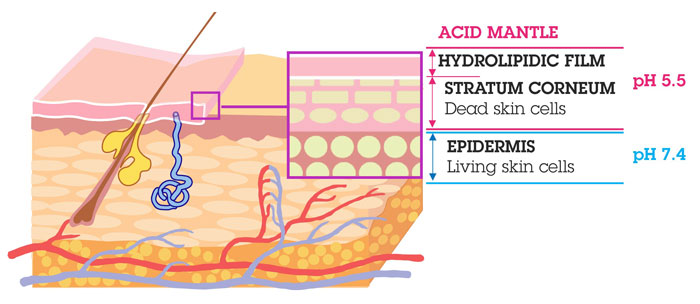
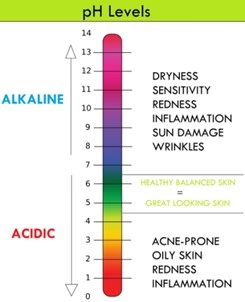
It typically has a pH range of about 4.5 to 5.5, which is lower than neutral pH (7). This acidity is essential: it inhibits the growth of harmful bacteria while supporting the beneficial microbes that make up the skin microbiome.
Think of it as your skin’s security system. When the acid mantle is healthy and intact, your skin can self-regulate, defend itself against irritation, and interact better with cosmetic products. But if it’s disrupted—by harsh cleansers, over-exfoliation, or even stress—your skin becomes vulnerable.
What Exactly Is pH?
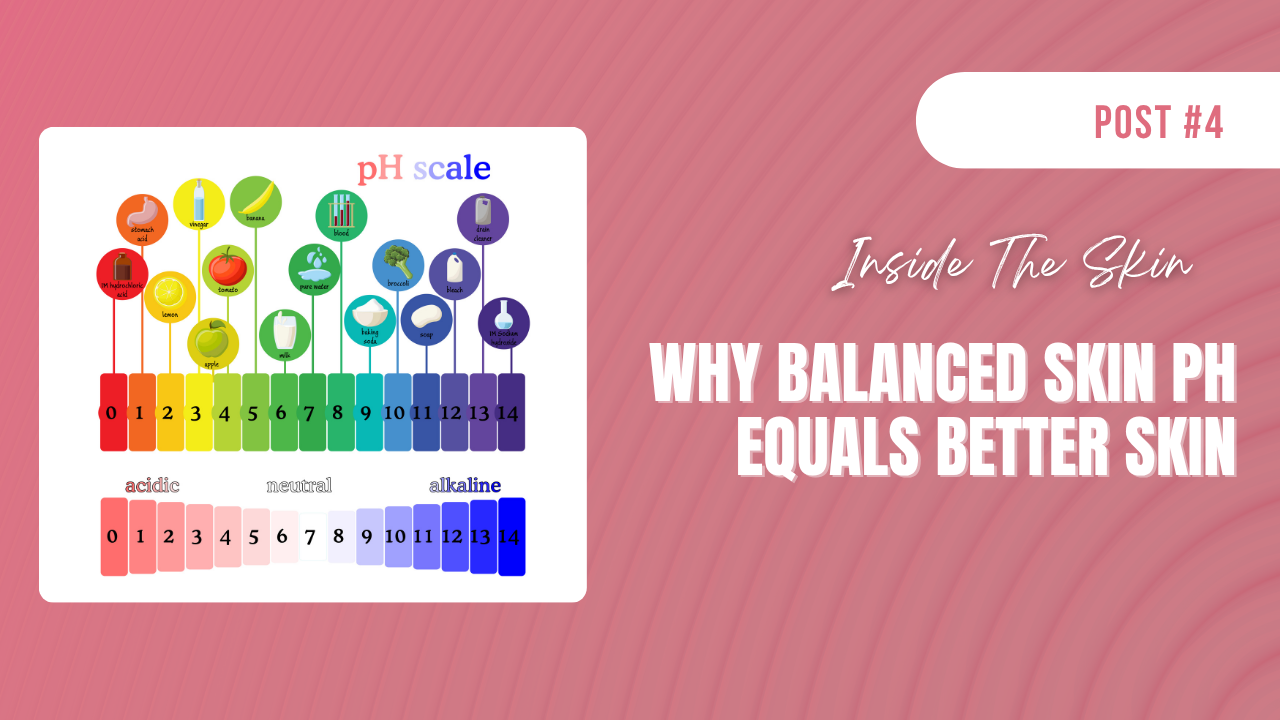
pH stands for “potential of hydrogen” and refers to the concentration of hydrogen ions in a solution. On the pH scale, which ranges from 0 (very acidic) to 14 (very alkaline), water sits at a neutral pH of 7.
Our skin, however, naturally leans toward the acidic side. This acidic environment helps maintain the structural proteins in the stratum corneum and regulates enzymes essential for the skin barrier’s formation and repair. In simpler terms: your skin works best when it’s slightly acidic.
Disruptions to this pH can lead to a weakened barrier, dryness, acne, sensitivity, or even chronic conditions like eczema.
How Skin pH Affects Its Health
The skin’s pH is crucial for several reasons:
- Barrier function: An acidic pH helps maintain the structure of the stratum corneum (the outermost layer of skin), which is responsible for keeping moisture in and irritants out.
- Microbial balance: Beneficial microbes thrive in acidic environments. When the pH is too high, harmful bacteria (like acne-causing C. acnes) can proliferate.
- Enzyme activity: Enzymes that help with shedding dead skin cells and forming lipids work optimally at the skin’s natural pH.
When your skin’s pH is altered, you may notice increased sensitivity, breakouts, inflammation, and dullness.
The Skin pH and Cosmetic Absorption
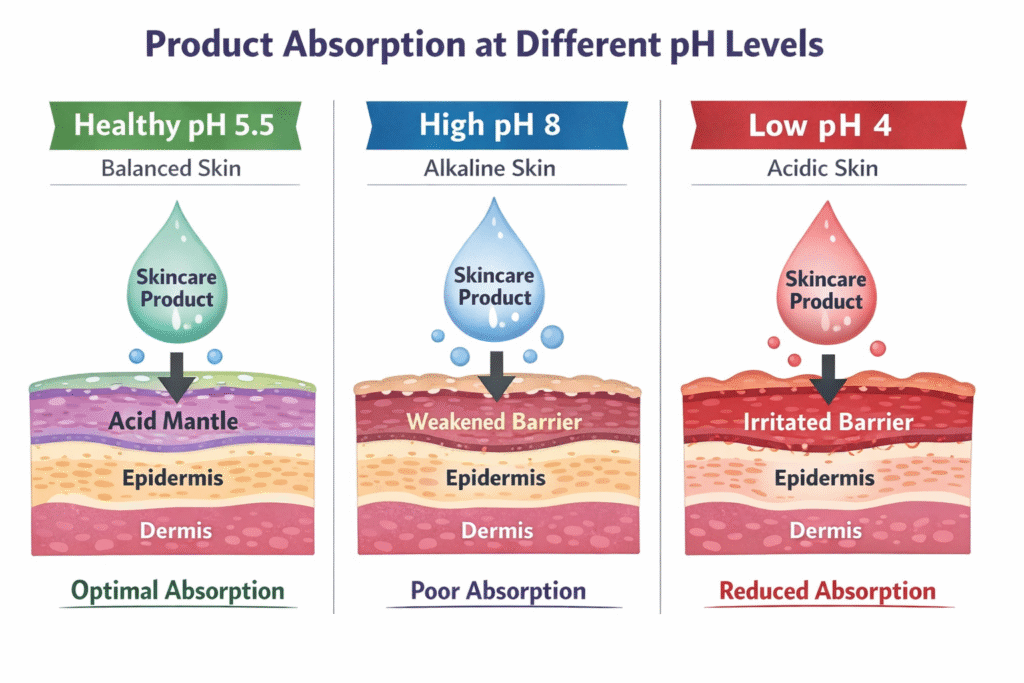
So, how does this affect your skincare routine? Skincare ingredients interact with the skin differently depending on the state of your acid mantle and the pH of the products you’re using.
For example:
- Low-pH products (around 3–4): These are typically acids like AHAs and BHAs. They can exfoliate the skin by loosening dead skin cells and speeding up cell turnover. However, they should be used sparingly, as overuse can damage the acid mantle.
- Neutral to slightly acidic products (pH 4.5–5.5): These are generally well-tolerated and ideal for daily use. They complement the skin’s natural pH and support barrier function.
- Alkaline products (pH 7+): Often found in soap-based cleansers, these can strip away oils and disrupt the acid mantle. Regular use can leave skin dry, irritated, and more prone to infections.
An unbalanced acid mantle can also alter how ingredients penetrate the skin. If the barrier is compromised, some ingredients may penetrate too deeply or irritate more easily.
Rebuilding and Protecting the Acid Mantle
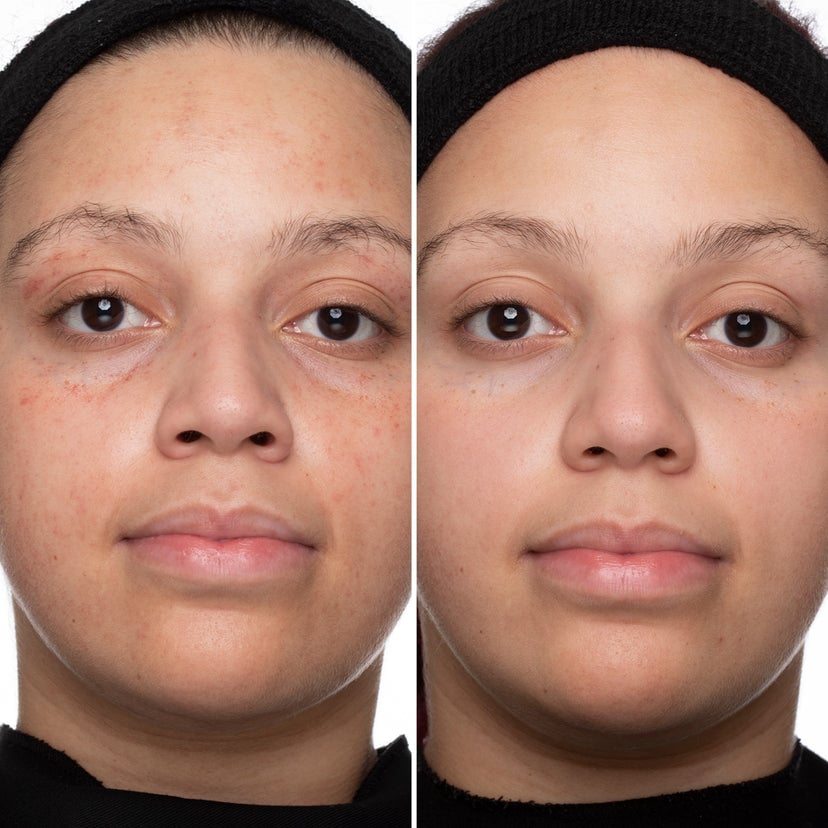
If your skin feels tight, itchy, or reactive, your acid mantle might be damaged. Fortunately, you can take steps to rebuild and protect it:
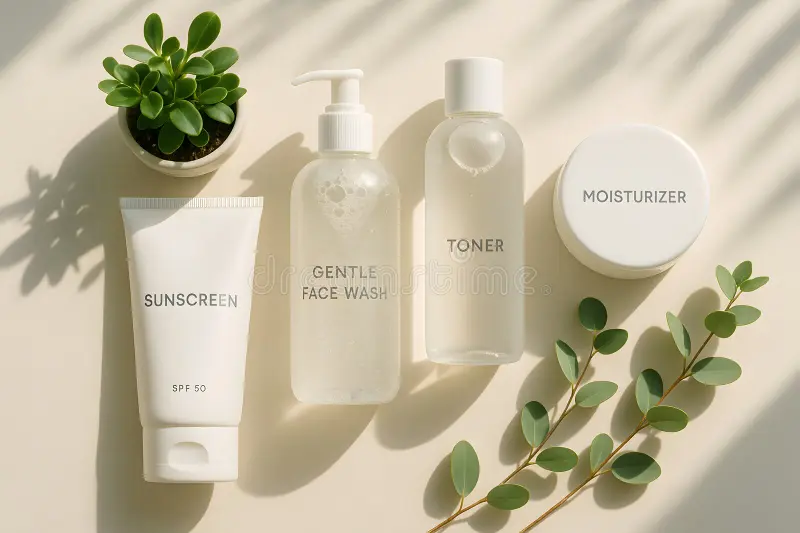
- Use pH-balanced skincare: Look for products labeled as pH-balanced or designed for sensitive skin. These usually fall in the 4.5 to 5.5 range.
- Avoid over-cleansing: Harsh cleansers and foaming soaps can strip natural oils and disrupt pH. Opt for gentle, sulfate-free formulas.
- Incorporate ceramides and fatty acids: These lipids help reinforce the skin barrier and maintain moisture.
- Limit exfoliation: While exfoliating can help with cell turnover, too much can thin the acid mantle. Once or twice a week is usually enough.
- Use barrier-supporting serums and creams: Products with niacinamide, panthenol, or hyaluronic acid can help repair and calm the skin.
How to Know if Your Skincare Products Are Skin pH-Friendly
Unfortunately, most skincare products don’t list their pH on the label. However, there are ways to find out:
- Look up the product online: Brands sometimes provide pH information on their websites.
- Check reviews: Skincare communities often test products with pH strips and share the results.
- Buy your own pH strips: These inexpensive tools can help you test a product at home.
If you’re using a mix of actives, like retinoids, acids, and vitamin C, pay close attention to how your skin feels. Stinging, redness, or irritation may signal that your pH has been pushed too far out of balance.
Final Thoughts
Your skincare routine could be packed with powerful ingredients, but if your acid mantle is compromised, you’re likely not seeing the results you want. Understanding the role of skin pH and the acid mantle is foundational for building an effective, skin-friendly routine. By choosing pH-balanced products and protecting this invisible guardian, you can improve both skin health and product performance.
Coming up next in the Inside the Skin Series: “Molecular Size and Skin Penetration: Why Not All Ingredients Go Deep” – a deep dive into how ingredient size and solubility determine how far actives can really go.
In our next post, we’ll talk about what happens to the skincare ingredients after they enter the skin..
Stay curious, stay beautiful, and stay tuned.
Want more posts like this? Subscribe to our newsletter and follow us on Instagram for weekly breakdowns of skin science and skincare truths.
Bear in mind that some of the links in this post are affiliate links and if you go through them to make a purchase I will earn a commission. Keep in mind that I link these companies and their products because of their quality and not because of the commission I receive from your purchases. The decision is yours, and whether or not you decide to buy something is completely up to you.